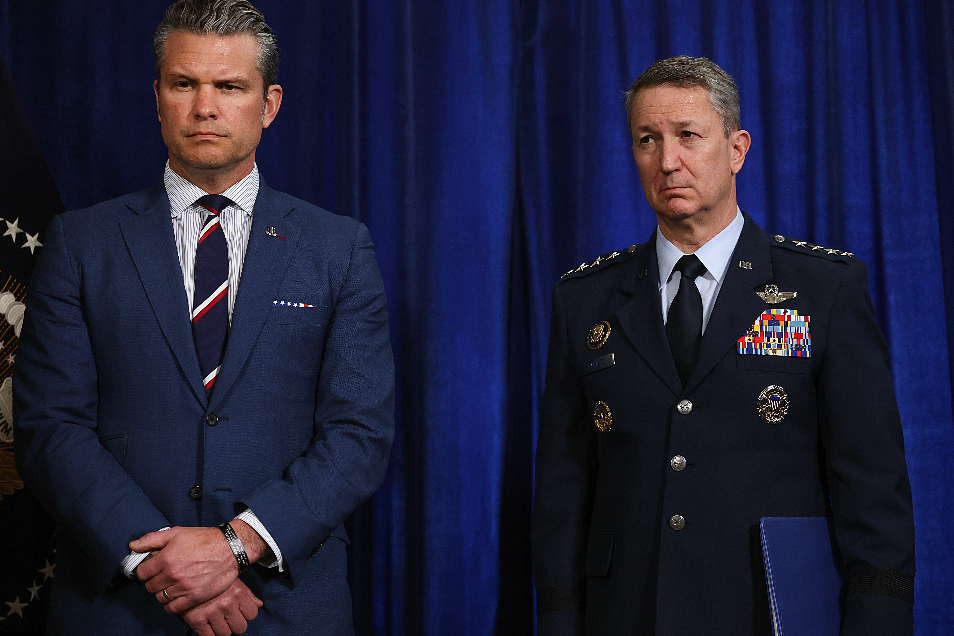
The September 2025 “double-tap” boat strike, in which American military forces killed survivors of an initial attack on a Venezuelan vessel allegedly carrying drugs, seems to have slipped out of the nation’s political focus. Nonetheless, the legal consequences, or lack thereof, for this boat strike, which appears to constitute a war crime, bears important consequences for adherence to norms of humanitarian law around the world.
Read MoreThe World Trade Organization’s dispute settlement system, once the cornerstone of rules-based trade, is in jeopardy. WTO law must be reinterpreted and reformed to accommodate geopolitical realities while preserving baseline legal predictability.

Read MoreThe BIOSECURE Act requires restructuring of the biotechnology industry and introduces national security as the third pillar of industry governance.
Read MoreRhode Island’s juvenile diversion system rests on a promise of rehabilitation but operates in a space between discretion and inequality.
Read MoreSpain’s ambitious renewable energy expansion has become one of the most expensive policy missteps in its modern economic history. Although it was once an ideal for solar and wind growth in Europe, the country now sits at the center of a global legal controversy, facing a wave of investor-state arbitration claims that could reshape how governments regulate climate and energy policy in an increasingly investment-driven world.
Read MoreThe Supreme Court’s increasing use of the emergency docket under the Trump Administration is shaping national policy and expanding executive authority without the transparency or deliberation the public expects from the Court.
Read MoreRecent Immigration and Customs Enforcement (ICE) operations and campaigns across American cities have raised many questions about the federal government’s power to interfere with state matters. President Trump, in response to former President Biden’s purported weak immigration and border policies, has instructed ICE officials to engage in aggressive measures to crack down on illegal immigration.
Read MoreCalifornia’s experimental climate disclosure laws serve as an attempt to introduce climate policy amid the deconstruction of comprehensive federal regulation. The resulting litigation, supported by the federal government, has left the future of the state’s climate disclosure regime uncertain. The outcome of this case may dictate whether there is a future for state-enacted environmental legislation.
Read MoreAnalysis of the Chevron Doctrine as a fundamental reallocation of interpretative power, arguing that the demise of Chevron raises unresolved questions about the constitutional structure of modern governance.
Read MoreThis response examines the Trump Administration's legal argument and rationale behind demolishing the White House's East Wing to develop a White House Ballroom. The article will also examine the December 2025 lawsuit by the National Trust for Historic Preservation against the Trump Administration’s ballroom project.
Read MoreThe retreat of Arctic sea ice is reviving a longstanding dispute under the Law of the Sea over whether the Northwest Passage falls under Canadian sovereignty or international transit rights.
Read MoreA 2024 constitutional reform introduced direct elections for Mexico’s highest judges, transforming the structure of judicial selection. This article examines whether democratizing the bench strengthens legitimacy or instead risks weakening judicial independence and the constitutional balance of power.
Read MorePresident Trump has embarked on an effort in his second term to reshape narratives told at cultural and historical sites across the nation. A legal battle unfolding in Philadelphia is gaining national attention regarding the National Park Service’s move to take down an exhibit providing historical context on slavery at George Washington’s historical residence. There are a few legal arguments being deployed in the face of unprecedented attempts to omit information on public sites overseen by the Department of the Interior, but their success remains to be seen.
Read MorePresident Trump signed America’s first landmark legislation regulating cryptocurrency into law last summer, highlighting the challenges federal lawmakers and regulatory agencies face as they try to keep up with rapidly developing emerging technologies.
Read MoreFor more than fifty years, language access has been treated as a component of national origin discrimination under federal civil rights law. Recent federal policy shifts expose the vulnerability of language access protections grounded primarily in administrative practice.
Read MoreThis article examines why banning source of income (SOI) discrimination by landlords is only half the battle in preventing housing discrimination. Stronger enforcement methods are necessary, and the law must reflect that.
Read MoreWhile we have witnessed remarkable progress in achieving compensation for student athletes, there are still questions as to the future of compensation schemes, employment status, and compensation equity.