Revisiting the Legality of Defense Secretary Hegseth’s “Double-Tap” Boat Strike
Credit: Stock Images
Venezuela has played a significant role in President Trump’s foreign policy during his second term. From his capture and arrest of Venezuelan President Nicolás Maduro, to his recent, seemingly joking claim that he would win a presidential election in Venezuela, President Trump has shown a sustained interest in shifting the course of U.S. relations with Venezuela. He has framed his foreign policy agenda around curbing alleged narco-terrorism and drug trafficking, taking an arguably unforeseen approach by imposing American control over the Venezuelan state and demanding “sanctioned oil” reportedly worth around $3 billion. Amidst all the other breaking news dominating the media cycle, from military operations in Iran, to the fallout of mass deportations, to historic Supreme Court decisions, and to the controversy surrounding the Epstein files, a particularly important episode in recent American policy foreign seems to have been all but forgotten: Defense Secretary Pete Hegseth’s September 2025 “double-tap” boat strike.
When the strike first made headlines, legal experts, human rights organizations and government officials alike condemned it as a war crime that blatantly violated international humanitarian law and standards of American military conduct. The U.S. conducted over 35 strikes against alleged drug smuggling boats since last September, killing at least 115 people with the supposed goal of stopping the flow of illegal drugs into the United States. This follows President Trump’s executive order designating Latin American criminal organizations and drug cartels like Tren de Aragua–a Venezuelan street gang–as "foreign terrorist organizations,” a label typically used for groups like al-Qa’ida or Boko Haram that perpetuate political violence rather than pursue profit.
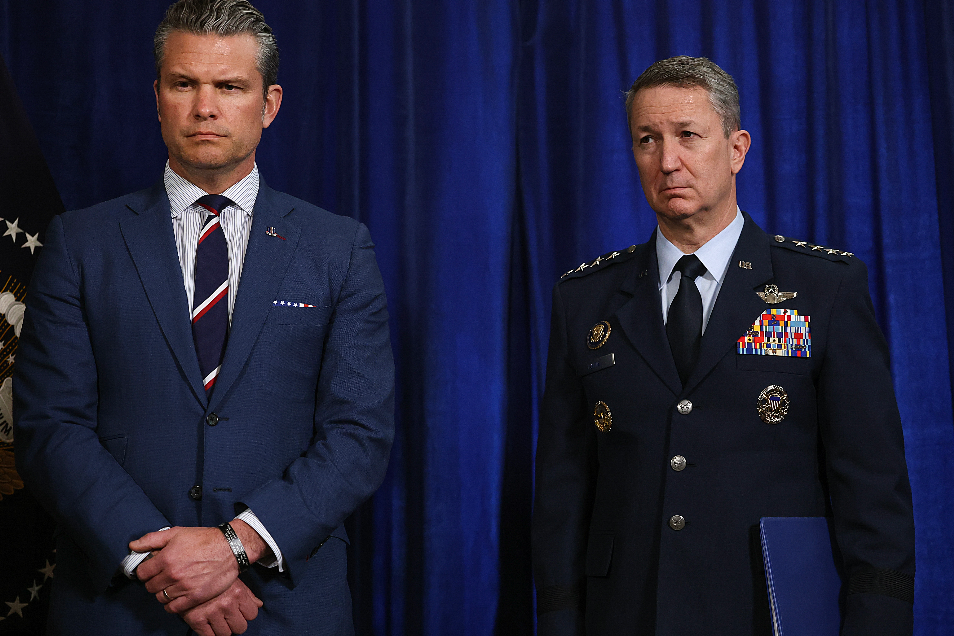
On September 2, 2025, the U.S. conducted its first strike on a boat in the Caribbean that President Trump claimed was operated by Tren de Aragua and engaged in drug trafficking. According to President Trump, all 11 people on the boat were killed. He posted a brief video clip of a small boat appearing to burst into flames. It later became public that the commander leading the operation had ordered a second strike, killing two survivors–an action widely considered a violation of international law. The second strike, or “double-tap,” was reportedly initiated by Admiral Frank “Mitch” Bradley in compliance with orders from Secretary of Defense Pete Hegseths. The Washington Post reported that Hegseth ordered Bradley to “kill everybody” on board the alleged drug boat, though Hegseth dismissed the report as “fake news” on X. Although there have been widespread concerns about President Trump’s expansive use of presidential war powers, as well as the soaring fatalities associated with strikes on the alleged drug-carrying boats, this double-tap strike is the source of the legal controversy at hand.
In the weeks and months following the first strike, the U.S. military conducted numerous other fatal strikes against alleged drug boats. Democratic lawmakers voiced their concerns about the lack of “legitimate legal justification” for the strikes. Senator Jack Reed (D-RI), the top Democrat on the Senate Armed Services Committee, cautioned that the U.S. military was not “empowered to hunt down suspected criminals and kill them without trial.” By October, even conservative lawmakers like Senator Rand Paul (R-KY) began to raise the alarm bells about extreme overreach in the use of presidential war powers.
This all came to a head when U.S. Representative Adam Smith (D-WA), the Ranking Democrat on the House Armed Services Committee, called for a hearing on the ongoing boat strikes, stating that he had “never seen such a staggering lack of transparency on behalf of an administration and the Department to meaningfully inform Congress on the use of lethal military force.” Admiral Bradley testified about the September 2 double strike in closed-door classified briefings at the Capitol, and lawmakers gave varying accounts of the briefing. Senator Tom Cotton (R-AR) told the press that “Bradley was very clear that he was given no such order, to give no quarter or to kill them all.” By contrast, Representative Smith described the survivors as “basically two shirtless people clinging to the bow of a capsized and inoperable boat, drifting in the water - until the missiles come and kill them.” Despite President Trump’s initial willingness to release the full unedited video of the double-tap, Hegseth eventually refused to make the video publicly available.
Putting aside President Trump’s desire for regime change and U.S. control of natural resources in Venezuela–as well as his interest in reviving the Monroe Doctrine and imposing American influence on the Western Hemisphere–the legality of the double-tap warrants careful scrutiny. Regardless of the strike’s motives, the way it was conducted may make the U.S. liable for a war crime. Although Hegseth claims that he watched the initial strike remotely, didn’t see any survivors, left for another meeting, and only learned hours later that Admiral Bradley ordered a second strike, both he and the White House have both defended the double-tap.
Abstractly, killing suspected drug traffickers who did not pose a threat of imminent serious injury would be considered murder under U.S. and international law. In this case, however, the Trump administration classified the boat passengers as armed groups rather than drug cartels, and claimed the attacks were consistent with the Law of Armed Conflict, a set of international rules governing the conduct of war. These laws compel militaries to treat civilians and combatants differently, refrain from attacks that cause disproportionate civilian harm, only use force for legitimate military objectives, and eschew any unnecessary suffering. The Trump administration claims that Venezuelan drug cartels pose an imminent threat to the U.S. through the impact of illegal narcotics, justifying the use of deadly force as a means of self sense.
Human rights groups and legal experts have pushed back against the Trump administration’s reasoning, arguing that drug cartels, as they do not carry out attacks for political or ideological purposes, do not fall under the internationally agreed upon definition of an armed group. Jessica Peake, the director of UCLA’s International and Comparative Law program, characterized the double-tap strike as “extrajudicial killings, in violation of international law” because “the U.S. is not in an international armed conflict with Venezuela, nor is the US in a non-international armed conflict with any criminal gang or drug cartels.” Furthermore, Peake asserted that even in situations of armed conflict, a double strike with the intention of leaving no survivors would be illegal under customary international law. According to former Bush administration official and legal scholar John Yoo, “if you look at the US law of war manual, which is the definitive interpretation of the way we fight, the laws of armed conflict for the United States, it says clearly that you are not allowed to give orders that say ‘no survivors.’”
Furthermore, under the American Constitution, only Congress has the power to declare war, and the president did not obtain congressional approval for the boat strikes. Even if the strikes were authorized by Congress, the military’s intentional killing of survivors could be considered illegal under the Defense Department’s Law of War Manual, which identifies attacks on incapacitated, unconscious, or shipwrecked combatants and cites attacking shipwreck survivors as “clearly illegal” orders that military officers should not follow. Congressional responses have been largely partisan: Republican members of Congress have defended the legality of the double-tap strike, effectively precluding legislative challenges to President Trump’s war powers given their control of Congress.
However, there is some division within the party. For instance, Senator Rand Paul wrote on social media that “it is not permitted, under the laws and customs of honorable warfare, to order that no quarter be given - to apply lethal force to those who surrender or who are injured, shipwrecked, or otherwise unable to fight,” and co-sponsored Democratic legislation that would have limited President Trump’s operations against Venezuela. With a Republican majority in both chambers of Congress, though, a domestic follow-up to the double-tap strike seems unlikely. Although the family members of an individual killed in the strikes filed a complaint with the Inter-American Commission on Human Rights, the Trump administration is unlikely to pay heed to international judicial proceedings, especially since the U.S. is not a signatory to the International Criminal Court and holds veto power at the United Nations Security Council.
It seems inconceivable that the double-tap strike could be forgotten so quickly given the legal controversy surrounding it just a few months ago–and yet, the news cycle seems to have left it behind. The Department of Justice and military is responsible for investigating where the orders for the double-tap originated from, whether these perpetrators were aware of the survivors, and other details of the September 2 strike. Both Hegseth and Bradley could be charged for murder or war crimes if the killings are found to be unlawful, with Hegseth prosecuted by the Justice Department in federal court and Bradley prosecuted in a court-martial, as is customary for war crimes. Following orders would be an insufficient legal defense if the orders in question were proven to be clearly illegal.
Although the absence of legal follow-up and public investigation surrounding the double-tap strike is concerning, the lack of government and military accountability is especially alarming considering the backdrop of current military involvement in Iran and other parts of the Middle East. Overlooking the illegality of the double-tap strike not only sets a dangerous precedent that war crimes are permissible, but also writes a blank check with regards to presidential and military power. The U.S. wields significant international influence, with possession of the world’s most powerful military. It is imperative that government and military officials continue to promote strict adherence to the rule of law abroad, not only because of their constitutional commitments, but also because of the threat that America’s adversaries could see this as an invitation to commit war crimes of their own.
Aditi Bhattacharjya a second-year studying Economics and International and Public Affairs at Brown University. She is a staff writer for the Brown Undergraduate Law Review and can be reached at aditi_bhattacharjya@brown.edu.
Ashley Park is a second-year studying Cognitive Neuroscience and Political Science at Brown University. She is an editor for the Brown Undergraduate Law Review and can be reached at ashley_h_park@brown.edu.