Internal Waters or International Strait? The Legal Battle Over the Northwest Passage
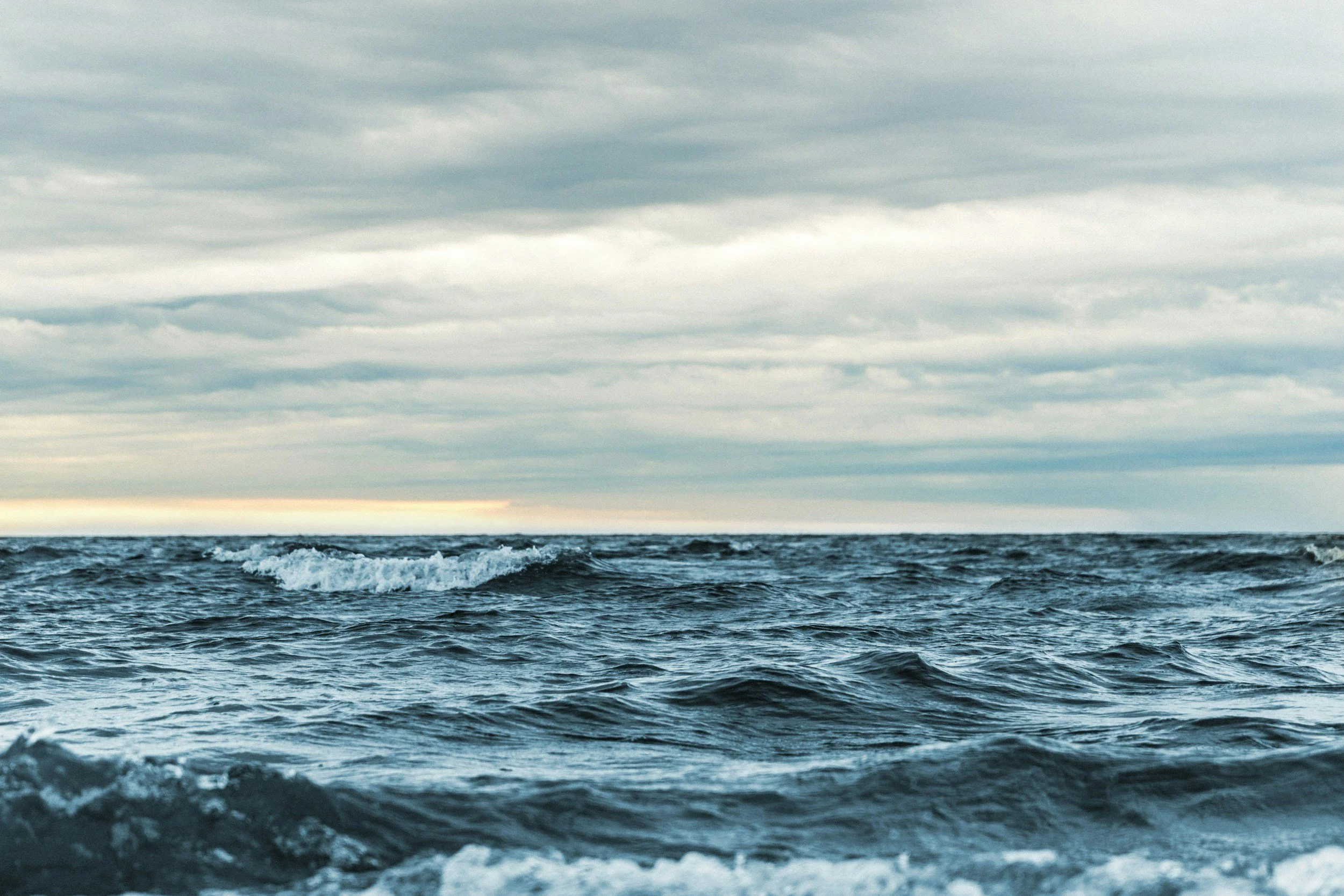
Credit: Stock Images
In the wake of climatic and geopolitical transformations, the Arctic has come under a chilling spotlight for the international community. In response to an increased Russian and Chinese military presence in the Arctic region, Washington has pioneered Western efforts to defend against the alarmingly close activity of rival superpowers, Russia and China. They have demanded the acquisition of the semi-autonomous region of Greenland from Denmark in the name of American national security. Even the Faroe Islands—another semi-autonomous Danish territory near the Arctic—has caught the interest of US leaders. As a result, Nordic NATO members and Ottawa have bolstered their Arctic defenses. For now, the allies have managed to ease tensions with Washington and placate its demands to seize territory in strategic proximity to the Arctic. But this scramble for the Arctic has begun to make Western allies confront issues of sovereignty, and Greenland is just the tip of the iceberg. Other important geopolitical issues of sovereignty, such as the longstanding debate between Washington and Ottawa over the Northwest Passage’s legal status, could certainly reintroduce hostility amongst allies and fracture divisions. In short, Ottawa and Washington must resolve their dispute over Canada’s claim of the passage by declaring it as internal, sovereign waters. This will ultimately preserve the integrity of Western democratic solidarity and promote cooperation amongst Western nations in defending the Arctic.
The Northwest Passage, which was once the object of fantasy for western European imperialists, is a route of waterways through archipelagos in Northern Canada that connects the Atlantic Ocean with the Pacific Ocean. While still difficult and expensive to navigate, it could become a key commercial shortcut between Europe and Asia by the middle of the twenty-first century. As Arctic ice continues to melt and as more ships become able to navigate this route, Ottawa and Washington must address the unsettled dispute over who controls the Northwest Passage and which entities are free to traverse its path. Ottawa maintains that the passage lies within internal Canadian waters, and therefore falls under total Canadian sovereignty. Washington, on the other hand, declares the Northwest Passage an international strait, with a right of passage for all nations on the basis of Article 37 of the United Nations Convention on the Law of the Sea. In order to mitigate these opposing claims, Ottawa and Washington have created an agree-to-disagree framework by ratifying the 1988 Arctic Cooperation Agreement:a treaty declaring that the United States must notify Canada of U.S. government icebreakers seeking to pass through the route, and that Canada consents to the passage of these American vessels. But this bilateral framework is only temporary. Ottawa and Washington must agree to a singular and permanent internationally recognized legal status for the strait.
Washington posits that Ottawa must comply with Article 37 of the United Nations Convention on the Law of the Sea, arguing that the Northwest Passage indeed belongs to types of “straits which are used for international navigation between one part of the high seas or an exclusive economic zone and another part of the high seas or an exclusive economic zone.” The strait satisfies the geography test outlined by the article because it clearly connects “two high seas,”:the Baffin Bay with the Beaufort Sea. Washington, moreover, interprets “ used for international navigation” as potential use and has determined that the strait also satisfies this functional test. After all, the passage exhibits current international shipping, which has increased in the last decade and which will continue to increase rapidly in the near future because of climate change. Consequently, Washington’s stance suggests that Canada must give up its sovereign rights over the waterway and permit the free passage of international vessels.
Ottawa, however, defends its historical sovereign claim to the waterway. While it acknowledges that the geographical nature of the strait fits the article's definition, Ottawa nevertheless suggests that the use insinuated by “ used for international navigation” is not a potential use but rather a historical use. The waters and sea ice between the Northwest Passage have belonged to the Inuit homelands for over centuries prior to modern geopolitical order and negligent international navigation. The passage is inseparable from the Inuit peoples ancestral rights and responsibilities of stewardship. As such, the waterway is a cornerstone of their indigenous sovereignty and of Canada’s own sovereignty. Not only does Ottawa argue that the strait is part of internal historic waters and therefore fails to meet the criteria outlined by Article 37, but it also argues that Washington’s position is inconsistent with the United Nations Declaration on the Rights of Indigenous Peoples.
Ottawa’s position on the legal status of the Northwest Passage and its claim of Canadian sovereignty is ultimately more compelling than Washington’s stance. Inuit sovereignty and historical presence in the waters of the Northwest Passage precede the assertions of Article 37 on international navigation use. Beyond Canada's fair compliance with international law, the Northwest Passage as a sovereign Canadian claim is more advantageous than treating the strait as a free international waterway. While the rich economic value of this strait’s potential openness could face loss, there is nevertheless an important trade off between wealth and security. Canada should have sovereignty over the Northwest Passage so that Ottawa can defend Western security. The potential for criminal, military, or air vessels to penetrate Canada’s Arctic archipelagos is a close internal threat to the West’s sphere. Canada’s sovereignty also ensures better environmental protection and defends the rights of the Inuit.
Thus, as climate change continues to transform maritime traffic, Ottawa and Washington will need to resolve this temporary arrangement. Canada’s claim over the Northwest Passage as internal waters is an appropriate legal interpretation of the United Nations Convention on the Law of the Sea’s Article 37. Ultimately, the recognition of Canadian sovereignty does not undermine international law. Rather, this recognition reinforces coastal states’ meaningful authority over sensitive maritime zones. In order to preserve Western defense cooperation in a new frontier of geopolitical competition, Washington and NATO allies must respect Canada’s legal position. The future of Arctic navigation should be shaped not by strategic competition alone, but by careful adherence to international legal principles.
Luca Raffa is a sophomore at Brown University studying History. He is a writer for the Brown Undergraduate Law Review and can be contacted at luca_raffa@brown.edu.
Ashley Park is a sophomore at Brown University studying Cognitive Neuroscience and Political Science. She is an editor for the Brown Undergraduate Law Review and can be contacted at ashley_h_park@brown.edu.