Defending Public Memory in the Courts
Credit: Stock Images
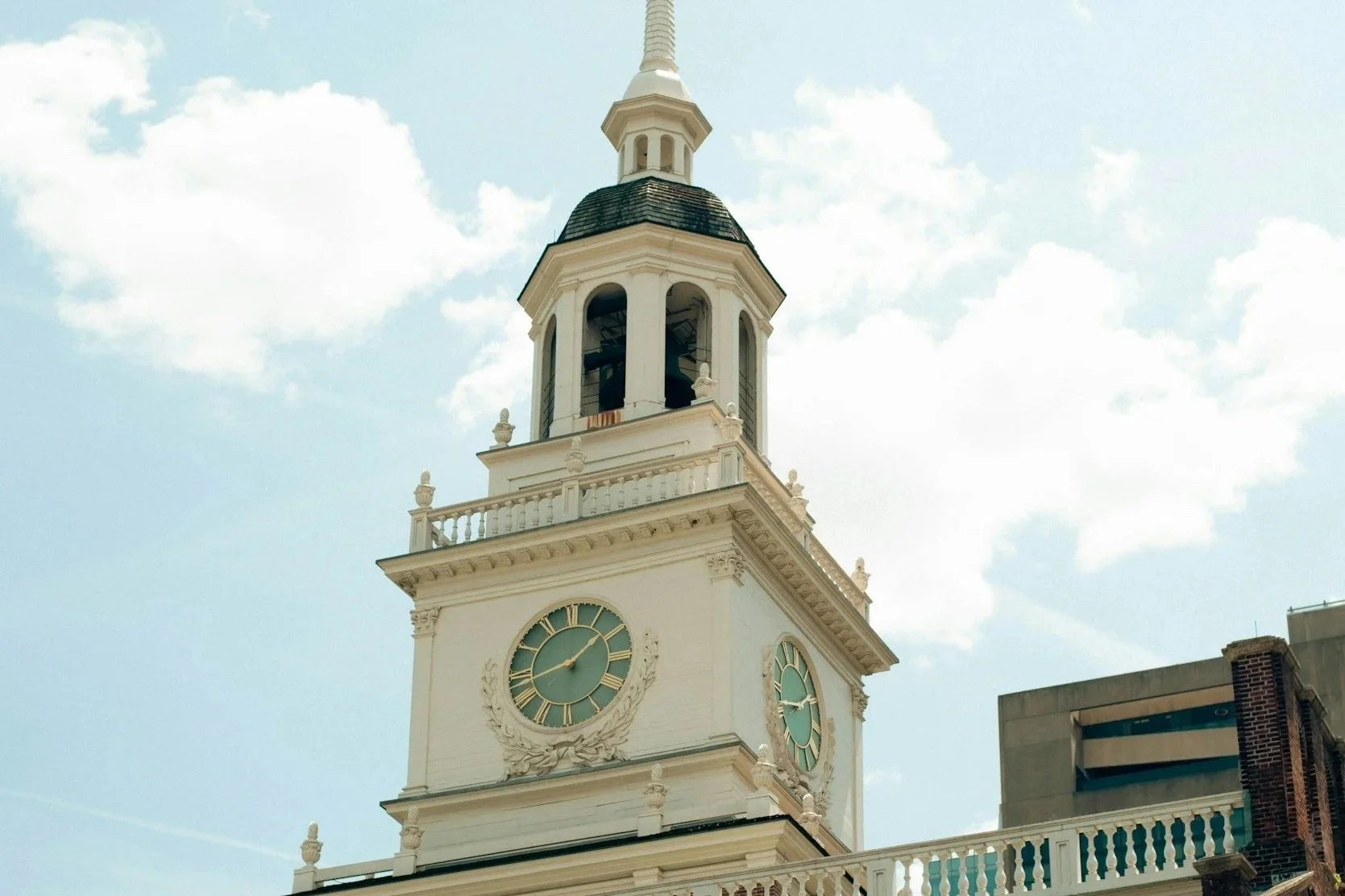
Since 2010, a limestone wall outside of George Washington’s historical home in Philadelphia has borne the etched names of the nine people who were enslaved there: Austin, Paris, Hercules, Christopher Sheels, Richmond, Giles, Oney Judge, Moll, and Joe. The etching is part of a 34-panel outdoor exhibit at the former presidential residence, titled “Freedom and Slavery in the Making of a New Nation.” The exhibit provides information on the Philadelphia slave trade, the lives of the nine enslaved people on the property, and the history of slavery in the Americas.
On January 22, 2026, employees of the National Park Service (NPS) dismantled the outdoor displays in compliance with a secretarial order issued by the Department of the Interior (DOI), SO 3431, carrying out President Trump’s March 2025 executive order, Restoring Truth and Sanity to American History. SO 3431 directs agencies under the DOI to “take action” to “ensure that all public monuments, memorials, statues, markers or similar properties within the Department’s jurisdiction do not contain descriptions, depictions or other content that inappropriately disparage Americans past or living.” The executive order calls for the removal of “improper, divisive or anti-American ideology” from U.S. public museums. The action represents one decisive step in the second Trump administration’s broader plan to reshape public spaces by removing monuments acknowledging black, indigenous, and queer history.
In the case of the President’s House exhibit, legal action soon followed in Philadelphia, and now the panels are half-restored, but the dispute raises a larger question of what legal tools cities and institutions have to challenge the executive office’s unprecedented attempts to alter public representations of historical narratives.
Following the removal of the exhibition panels, when only the etchings of the names remained, the City of Philadelphia filed a lawsuit challenging the DOI’s move on January 22, claiming the federal government violated an agreement between the city and NPS created before the exhibit’s construction. The 2006 Cooperative Agreement requires representatives of the city and federal government to discuss any changes, with a 2009 amendment to the legislation designating Philadelphia responsible for the “design, fabrication, installation, and completion” of the site. The agreement states the site would be “owned” and “managed” by the NPS and requires written agreements between the NPS and the city to permit proposed changes. The agreement also states that the site would “commemorate the enslaved Africans who resided in the Washington household.” With dual attention from both the local and federal government, the historical residence has also benefited from federal and city funds; Philadelphia has contributed over $3.5 million of city taxpayer money to the presidential home.
A spokesperson for the DOI responded to the city’s legal challenge by calling the case “frivolous lawsuits in the hopes of demeaning our brave Founding Fathers who set the brilliant road map for the greatest country in the world—the United States of America.” On January 27, Pennsylvania Governor Shapiro filed an amicus brief in support of the lawsuit, calling the Trump administration’s action an attempt to “whitewash” history.
On Presidents’ Day, the holiday created in honor of George Washington, federal judge Cynthia M. Rufe ruled that the DOI’s action was unlawful and granted an immediate injunction, requiring the reinstallation of the 34-panel exhibit. The administration filed an appeal to the ruling, and while the case awaits a final decision, the Appeals court is allowing the NPS to pause the reinstallation process, halting Judge Rufe’s order. The Justice Department, in support of DOI’s appeals case, wrote that Judge Rufe’s decision was “extraordinary” and “an improper intrusion on the workings of a coequal branch of government.”
Where a city-federal agreement for historical sites is not uncommon, many of the administration’s attacks on displayed historical content have occurred on public land managed by NPS or through coercive measures in private institutions, raising further questions about the legal tactics available to sustain ongoing efforts on behalf of historians and curators to tell accurate histories. There are arguments that Trump’s executive order and related actions tread into the territory of discrimination law and breach the borders of federal executive powers.
Organizations are invoking discrimination arguments in a lawsuit challenging a recent order for the Stonewall National Monument to remove its pride flags. The historical site, significant for LGBTQ+ history, is managed by NPS, with no cooperative agreement with New York City like the one in Philadelphia. A handful of nonprofits joined a lawsuit against DOI, claiming unlawful discrimination and citing the continued sale of confederate flags in national monument gift shops, but the prohibition of selling pride flags. The lawsuit also claims “impermissible animus” against the LGBTQ+ community and calls the order to remove the Pride flag “a textbook example of an arbitrary and capricious act.”
Other groups have joined lawsuits challenging the executive branch’s attempts to remove narratives it finds problematic on public lands, arguing the administration is infringing on Congressional authority and overstepping executive authority. Plaintiffs in a recent lawsuit argue that recent NPS actions contradict clear mandates from Congress about how national parks must be managed, including the NPS’s explicit designated purpose of preserving natural, historical, and cultural resources and providing educational materials. Many of these legal cases, including the Stonewall suit, claim that the actions are “arbitrary and capricious,” violating the Administrative Procedure Act. State Representative Dwight Evans, who represents Philadelphia, told AP news amidst the President’s House controversy, “Their shameful desecration of this exhibit raises broader, disturbing questions about this administration’s continued abuse of power and commitment to whitewashing history.” It remains unclear how courts will rule in these many lawsuits.
As disputes arise around the country, the case of Washington’s presidential residence stands out as particularly ironic. NPS’s effort to erase enslavement history from the museum of George Washington’s home represents the current president looking back at a previous president and deciding that America doesn’t need to remember an unfavorable fact. Washington owned nine people and participated in the system of American slavery—facts that, in the private realm of Washington’s residence, are perhaps more important for historical purposes than details about his wardrobe. President Trump is effectively dismissing not just an enormous part of American history, with the consequences still ringing throughout the nation, but also the accountability Americans hold today on a past president, suggesting that presidents can do many things and have the right to be remembered only for the good things.
Playing with public memory is an attack on minority groups whose history is represented, and it is also an insult to America’s historians, artists, institutions, and local governments, which have carefully curated public memorials and displays to monumentalize and remember the nation’s history accurately. Judge Rufe’s opinion drew parallels to George Orwell’s dystopian novel 1984, writing, “The government claims it alone has the power to erase, alter, remove and hide historical accounts on taxpayer and local government-funded monuments within its control. Its claims in this regard echo Big Brother’s domain in Orwell’s 1984,” Rufe wrote in her 40-page opinion. “This Court is now asked to determine whether the federal government has the power it claims. It does not.” Meanwhile, scholars have equated Trump’s actions with McCarthyism, and others have drawn parallels between his attack on public information and that in Nazi Germany.
Perhaps more Big-Brother-like is the widespread compliance underway. Only a portion of states and institutions are willing to pick a fight over its publicly displayed history and information. After the president signed SO 343, many historical sites complied with the order, taking down exhibits of slavery or highlighting marginalized groups, with some locations also removing language on climate change. Many have shrugged and agreed with the new rules. This compliance not only normalizes the disappearance of massive chunks of important history but also normalizes the unjustified expanded role of the presidency into that of a public historian.
The administration’s similar effort to reshape public narratives through interference with private museums raises further concerns, as institutions are in a stalemate, fearful of aggravating Trump. A few months after SO 343, President Trump escalated attacks on museums by targeting the Smithsonian, saying it focuses too much on “how bad slavery was,” and initiated audits of all the institution’s museums. He appointed Vice President JD Vance to the institution’s governing board, already filled with government representatives, to ensure the removal of “improper ideology.” While a private institution, the Smithsonian receives about 62% of its budget from federal funds appropriated by Congress and remains committed to working with both Congress and the administration. However, museums have limited ability to challenge the administration, and as the New York Times writes, they are fearful of being on Trump’s bad side. “The arts have never had a very strong voice in government, given the sector’s lack of financial and political capital,” write journalists Jess Bidgood and Robin Pogrebin. “Trump has cultural institutions in a defensive crouch.”
Clint Smith, who studies how African American history is represented across the U.S., writes in his book How the Word is Passed, “We’re telling history by telling the full story, more of the story of everyone who lived here, not just certain people who were able to tell their stories.” By selectively omitting parts of history, the administration is abandoning attempts to tell a “full story” in favor of constructed narratives that suit the administration’s political ideology.
Annabel Williams is a senior at Brown University studying International and Public Affairs. She is a Blog Writer and an Illustrator for the Brown Undergraduate Law Review, and can be reached at annabel_williams@brown.edu.
Natalia Riley is a junior concentrating in Economics and International and Public Affairs. She is a staff editor for the Brown Undergraduate Law Review and can be contacted at natalia_riley@brown.edu.