Are You a States’ Rights Advocate? You Should Deplore the Recent ICE Operations in U.S. Cities
Credit: Stock Images
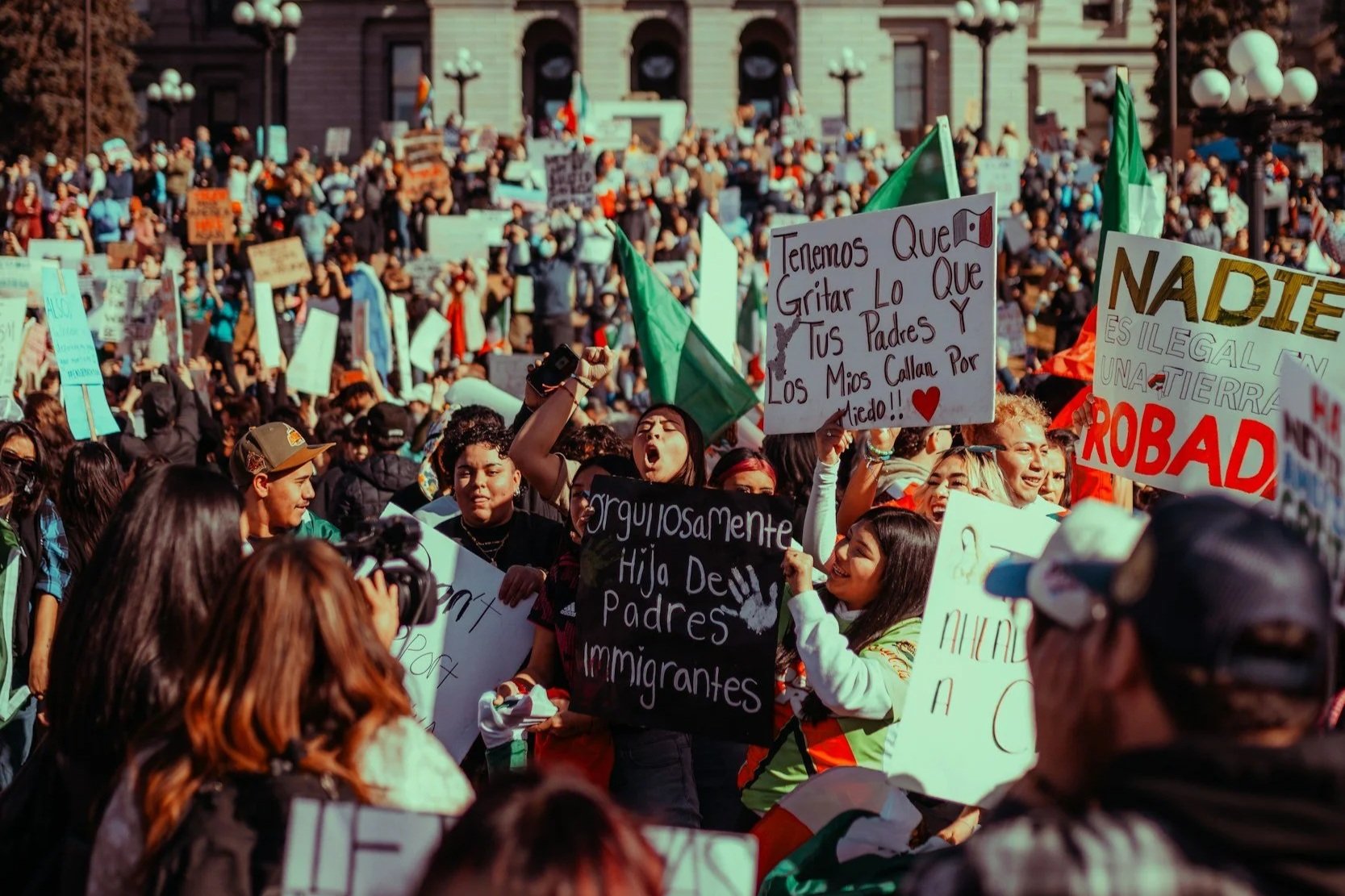
Recent Immigration and Customs Enforcement (ICE) operations and campaigns across American cities have raised many questions about the federal government’s power to interfere with state matters. President Trump, in response to former President Biden’s purported weak immigration and border policies, has instructed ICE officials to engage in aggressive measures to crack down on illegal immigration. He also instructed the federal government to withhold, “to the maximum extent possible under law,” federal funding from jurisdictions and cities that maintain sanctuary policies for undocumented immigrants. Whether or not one agrees with the President’s methods or goals, the ensuing effects of these policies have left local communities in disarray and shock. This has prompted some to return to America’s founding principles of federalism and dual sovereignty, contending that the extreme actions taken by the current administration and ICE illegally interfere with state autonomy and violate the Tenth Amendment of the United States Constitution.
The notion of “states’ rights” has played a central role in American political discourse for centuries. Historically, appeals to state autonomy were often invoked to defend systems that restricted individual liberty, most notably the preservation of chattel slavery and later Jim Crow segregation. Other historical figures, such as Vice President John C. Calhoun, famously advocated for the right of a state to nullify any federal statute with which it disagreed. This concept, though also steeped in racist origins, in general sought to shield state institutions from federal interference. In contemporary political discourse, however, the principle has taken a different rhetorical role. Modern defenders—mostly conservative Republicans—invoke states’ rights to argue against federal intervention (via legislation or litigation) in matters they view as belonging to local democratic choice. The chief example of this is abortion and reproductive rights, where states’ rights advocates celebrated the return of this issue to the prerogative of the states following the Dobbs decision in 2022.
In order to contextualize the current ICE situation with this principle, however, it is important to look at the origins of why this system of dual sovereignty exists. The Tenth Amendment stipulates that “powers not delegated to the United States by the Constitution, nor prohibited by it to the States, are reserved to the States.” The history here matters. During the debate over ratification of the U.S. Constitution, the Anti-Federalists were incredibly fearful of the strong federal government the document would create; they believed that the rights of individuals and of different states would be trampled upon by an authoritative central government. This conviction was not unwarranted, given the recency of the revolution against Britain and the myriad of injustices and abuses the colonists suffered at the hands of the Crown. Consequently, as a compromise with the Anti-Federalists to ratify the Constitution, the Federalists promised a Bill of Rights that would enshrine a set of essential liberties into the document—including the Tenth Amendment, which expressly gave states control over most everything not explicitly relinquished to the federal government.
Many Federalists thought this deference was embedded in the document already, simply by listing the only powers that the federal government possessed in Article 1 Section 8. Alexander Hamilton, for example, asserted in The Federalist 28 that “State governments will, in all possible contingencies, afford complete security against invasions of the public liberty by the national authority.” James Madison similarly proposed in The Federalist 45 that “The powers reserved to the several States will extend to all the objects which, in the ordinary course of affairs, concern the lives, liberties, and properties of the people.” Thus, while there were disagreements between the Federalists and the Anti-Federalists insofar as they feared the federal government becoming too powerful and infringing upon the rights of individuals and states, both camps believed in robust state governments, specifically in protecting “public liberty” and the rights of the people residing therein.
Case law concerning precedential understandings of law enforcement and federal power can further inform current litigation on ICE's actions. To start, the authority to create and enforce immigration law has been interpreted by the U.S. Supreme Court for over a century to belong with the federal government. This power is primarily grounded in the Naturalization Clause of the U.S. Constitution, as well as the power to engage in foreign affairs under the Commerce Clause. This precedent was reaffirmed in 2012 in Arizona v. United States, where the Supreme Court invalidated several parts of an Arizona state law concerning immigration enforcement. One such provision struck down allowed state law enforcement “to make arrests on suspicion that an individual was an illegal immigrant.” Justice Kennedy, writing for the Court, reasserted that the federal government has “broad, undoubted power over immigration and alien status” and that “[t]he Supremacy Clause gives Congress the power to preempt state law” pursuant to the same matters.
Policing power, however, has been interpreted to be the prerogative of the states. In Munn v. Illinois, the Supreme Court provided that it is the authority of states to make and enforce laws that concern “the peace, good order, morals, and health of the community.” To take this a step further, the Court in recent decades has numerous precedents that forbid the federal government from “commandeering” state and local officials into doing the “federal government’s bidding or to help enforce federal laws.” This doctrine—as applied to state officers—primarily derives from Printz v. United States, where the Court held that the congressional requirement for chief law enforcement officers in local jurisdictions to conduct firearm background checks consistent with the Brady Handgun Violence Prevention Act is unconstitutional under the Tenth Amendment. This precedent was also reaffirmed recently in 2018, where the High Court maintained in Murphy v. NCAA that “[a]dherence to the anticommandeering principle…serves as “one of the Constitution’s structural safeguards of liberty…[and] promotes political accountability.”
Finally, the Supreme Court applied a similar anti-coercion principle to the conditional federal spending program in the Affordable Care Act, where Congress “threatened to oust state[s] from the Medicaid program if [they] did not agree to the proposed expansion.” In his opinion in NFIB v. Sebelius, Chief Justice John Roberts found that the spending program was not merely a suggestive “pressure”; rather, it was a “gun to the head” of the states tasked with carrying out the plan. One might wonder how this squares with South Dakota v. Dole, where the Court upheld a federal law that conditioned highway funding on states establishing a minimum drinking age of 21. The key difference is how reasonable the conditional funding is: in South Dakota, the total conditional funding amounted to only five percent of highway-specific funding for states; in NFIB, the total was over ten percent of the entire state budget. The former is merely a type of moderate pressure from the federal government, whereas the latter can reasonably be viewed as overt federal coercion.
These entrenched precedents can be used to make a series of conclusions, broadly about law enforcement power and specifically to the ICE operations. First, federal law enforcement—in this case, immigration and customs enforcement—can absolutely carry out their duties inside of states, even against the will of state governments. This is true so long as their actions are in accordance with their federal duties and consistent with the numerous due process protections afforded to all persons, not just citizens. Second, ICE is limited in the scope of its authority and may not transform immigration enforcement into generalized public safety policing traditionally reserved to states. Thus, I am in no way arguing that ICE should not exist nor that they cannot operate within states, only that their missions must be targeted to carrying out their specific legal prerogative. Third, based on the anti-commandeering principle, the anti-coercion principle, and the Tenth Amendment, ICE and the Department of Homeland Security cannot coerce local law enforcement into carrying out federal instructions or demands. This last claim is the most interpretive and warrants further discussion, especially in light of additional facts.
The events in Minnesota provide a case study for assessing whether federal immigration enforcement has remained within its enumerated authority or instead drifted into coercion or commandeering, thus infringing on state sovereignty. To start, federal agents plainly retain authority to enforce immigration law within the state under Arizona. But while this case stipulates that states cannot interfere with the delegated powers of the federal government or how those duties are executed, it does not give a green light to the federal government to interfere with internal state governance. Justice Sandra Day O’Connor, in her majority opinion in New York v. United States—another case revolving around the anti-commandeering principle—expressed that the “Constitution […] confers upon Congress the power to regulate individuals, not States.” This principle can be used as a litmus test as to the constitutionality of the recent ICE operations.
The State of Minnesota has alleged that 3,000 federal agents were deployed to the Twin Cities, a number exceeding the “entire Minneapolis police department by roughly five to one.” Based on the same brief, these officers have overtaken public spaces, caused the redirection of public resources, engaged in indiscriminate stops of citizens, and instilled fear in the communities they have occupied—especially in light of the Renee Good and Alex Pretti shootings. These facts do not merely describe an aggressive enforcement campaign; they describe an operation that blatantly disrupted the governance of a state.
Firstly, the tremendous number of federal officers is constitutionally suspect from a federalism standpoint. Their presence itself is not illegal, but their indiscriminate stops of citizens and violent encounters with protesters push the bounds of federal authority. Chief Justice Rehnquist, in United States v. Morrison, wrote that “there is no better example of the police power…than the suppression of violent crime and vindication of its victims.” Insofar as ICE is there to enforce immigration law, they are within their authority; but actions like these resemble general public-safety policing traditionally associated with state police powers.
Second, the redirection of a state’s limited resources—particularly funding—due to federal interference and actions itself raises constitutional concerns under the anti-commandeering doctrine. According to Printz, the federal government may not shift costs of regulations onto states. While incidental costs would likely survive judicial scrutiny, the state has asserted extensive resource redirection to prepare for emergencies, respond to public concerns, and dispatch police officers for deescalation during the ICE operations. Though not analogous to the facts in Printz, this situation might present a legal question regarding extreme, albeit indirect cost-shifting that burdens state resources.
Lastly, taken with the fact that many ICE officers are on duty with “police” printed on their uniforms, these actions in the aggregate obscure the line between local and federal actors and blur the critical principle of political accountability that Justice Alito describes in Murphy. “Voters who like or dislike the effects of the regulation know who to credit or blame” when the distinction between federal and state action is clear. When federal officers present themselves in ways that resemble local law enforcement, clarity erodes, making it difficult for the public to attribute responsibility for enforcement decisions. The anti-commandeering doctrine exists precisely to prevent such diffusion of accountability.
The commandeering argument, however, does not end with the physical presence of ICE within the communities. In a letter to Minnesota Governor Tim Walz, Attorney General Pam Bondi contended that the primary reason for the continued, intense, and scaled ICE presence in the Twin Cities was because local law enforcement were not complying with the federal agenda to crack down on illegal immigration. Similarly, “Border Czar” Tom Homan suggested that Trump officials “decided to raid the Minneapolis area because it did not [agree to cooperate with ICE]” in the same way as other counties in Minnesota had. These comments, coupled with the fact that Minnesota has a much smaller population of undocumented immigrants compared to other states and even the national average, seem to suggest that the primary objective here is not the enforcement of immigration law. Rather, it appears to be retaliation from the federal government toward a state that maintains policies with which it disagrees. Applying the principle of Justice O’Connor, ICE and the Trump Administration are regulating “states” instead of “individuals.” This is no basis for this under the Tenth Amendment or in the Supreme Court’s anti-commandeering jurisprudence.
Finally, the Trump Administration has also threatened to withhold funding for social programs in states like Minnesota to attempt to force states’ hands in complying with federal law enforcement. In Minnesota specifically, the funding and federal grants jeopardized by President Trump exceeded 2 billion dollars – money that would go toward infrastructure and natural disaster relief. During the 2022 fiscal year, Minnesota received roughly 21.9 billion dollars in federal money and had a total state revenue of 82.1 billion, meaning the funding threatened by President Trump totaled over nine percent of Minnesota’s total federal transfers and almost two and half percent of total revenue. Furthermore, the President is looking to withhold an additional $259 million in Medicaid funds for purported “welfare fraud” of undocumented immigrants. While these numbers are not quite at the same level as the conditional spending clause in the ACA struck down in NFIB, they exceed the reasonable level of conditional highway funding that was upheld in Dole. This “economic dragooning” further supports the notion that the entire DHS and ICE operation is an unconstitutional overreach of federal authority meant to punish a state for its refusal to align with federal immigration priorities.
Taken together, the presence of numerous federal officers in the streets, public statements from Trump Administration officials linking deployment to state non-cooperation, and threats of substantial funding cuts suggest that the operation resembles not ordinary immigration enforcement, but a coercive apparatus intended to alter state and local policy choices. None of this should be construed to deny that immigration enforcement is a federal prerogative. The Supremacy Clause, as Justice Kennedy laid out in Arizona, ensures that valid federal immigration law supersedes conflicting state enactments and justifies the federal enforcement thereof. But supremacy does not authorize the federal government to utilize its specific powers as instruments for modifying state policy choices. Today, a Republican president is attempting to circumvent the system of federalism for immigration policy. Tomorrow, it could be a Democratic president with a unique agenda seeking to force the hand of a different state. The structural protections of federalism do not depend upon the identity of the administration in power. As Madison noted in The Federalist 45, “The powers delegated…to the federal government are few and defined; Those which are to remain in the State[s] are numerous and indefinite.” The preservation of this structural balance—not allegiance to any particular administration or policy—is what the Constitution demands.
Nik Greborunis is a sophomore at Brown University studying Political Science and Chemistry. He is a Staff Writer for the Brown Undergraduate Law Review, and can be reached at nikolas_greborunis@brown.edu.
Wesley Horn is a sophomore at Brown University studying History and Economics. He is an Associate Editor for the Brown University Law Review blog, and can be reached at wesley_horn@brown.edu.
Emily Walsh is a sophomore at Brown University from Minneapolis studying Philosophy and International and Public Affairs. She is an Associate Editor for the Brown University Undergraduate Law Review and can be reached at emily_m_walsh@brown.edu.