Birthright on Trial: The Constitutional Battle Over Who Belongs in America
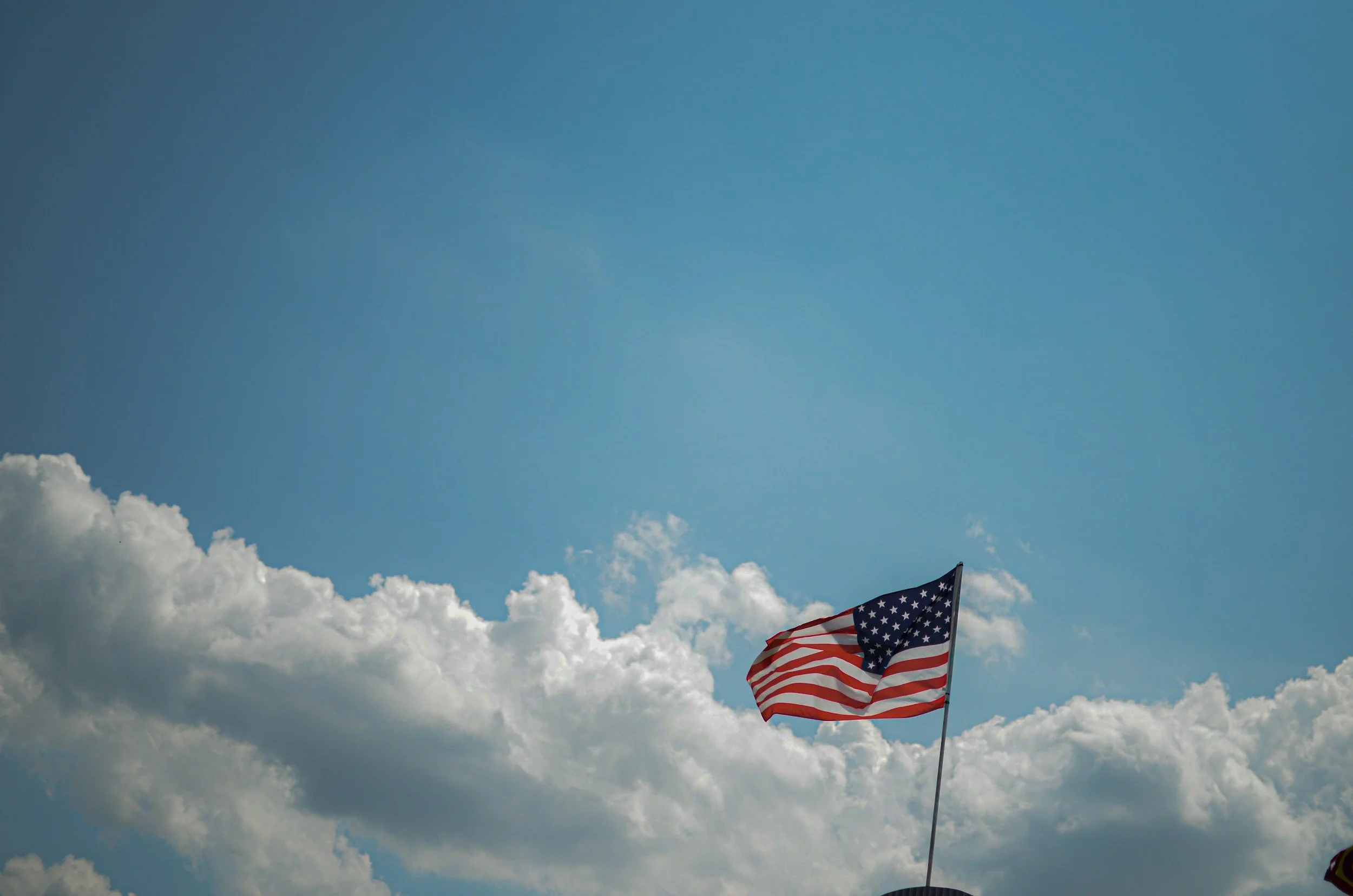
credits to stock images
In January 2025, Donald Trump began his second term with a move that tested the boundaries of the Constitution itself. His administration issued Executive Order 14160: Protecting the Meaning and Value of American Citizenship, which denies birthright citizenship to children born in the United States if their parents are undocumented or only temporarily present. It is the most direct challenge to the Fourteenth Amendment in more than a century.
The order argues that the Fourteenth Amendment’s Citizenship Clause “has never been interpreted to extend citizenship universally” to everyone born on U.S. soil. By this logic, the children of undocumented or temporary immigrants are not truly “subject to the jurisdiction” of the United States Constitution and therefore not citizens. Federal agencies such as the State Department and Social Security Administration were directed to deny passports and Social Security numbers to such children, effectively erasing their citizenship on paper.
This is not just a bureaucratic policy change. It is an attack on a core constitutional principle that defines what it means to belong in America.
The Fourteenth Amendment was passed in 1868 to correct one of the nation’s greatest moral and legal failures: Dred Scott v. Sandford (1857), which denied citizenship to Black Americans. The amendment’s Citizenship Clause was meant to end that question of citizenship permanently. As legal scholars Samuel Breidbart and Maryjane Johnson write, Congress made the clause deliberately broad, extending citizenship to “all persons born or naturalized” in the United States, regardless of the status or nationality of their parents. The Supreme Court affirmed this interpretation in United States v. Wong Kim Ark (1898), holding that the child of Chinese immigrants, who were barred from naturalization at the time, was indeed a U.S. citizen at birth.
That precedent has never been overturned. Every branch of government has since treated birthright citizenship as settled law,yet Trump’s order attempts to relitigate it through executive action, bypassing both Congress and the constitutional amendment process.
Breidbart and Johnson note that if enforced, the order would create a stateless subclass of children—born here, raised there, but denied documents proving they belong here. Without those papers, they cannot access healthcare, education, or work authorization and they can be deported from the only country they have ever known. It is not an exaggeration to say that the order resurrects the logic of Dred Scott in modern form, redefining citizenship as something conditional, not inherent.
The legal challenge was swift. Civil rights groups, advocacy organizations, and states sued to block the order. The first major case, Trump v. CASA, reached the Supreme Court in mid-2025. Instead of deciding whether the order violated the Fourteenth Amendment, the Court’s conservative majority focused on procedure. In a 6–3 decision, the Court ruled that federal judges lack the authority to issue “universal injunctions” that block government actions nationwide. Writing for the majority, Justice Amy Coney Barrett claimed that such injunctions had “no historical basis” under the Judiciary Act of 1789.
This technical decision had enormous consequences. By limiting injunctions to specific plaintiffs, the Court weakened one of the few tools available to stop unconstitutional policies before they take effect. As legal analyst Michelle Lapointe warned, the ruling “embolden[s] the executive to ‘give it a try’” even with likely unconstitutional actions. It sent a message: a president can push the limits of legality, and unless plaintiffs can file dozens of simultaneous lawsuits, the policy can still move forward in much of the country.
In response, the ACLU and its partners shifted strategy. They filed a class action lawsuit, Barbara v. Trump, on behalf of all the children who would be affected by the order. On July 10, 2025, a federal court provisionally certified a nationwide class and blocked Trump’s executive order from being enforced against anyone in that class. Cody Wofsy, deputy director of the ACLU’s Immigrants’ Rights Project, described the outcome as turning the administration’s procedural win in CASA into “an empty victor.” (INSERT SOURCE). The courts reaffirmed what constitutional history already makes clear: birthright citizenship cannot be undone by executive power.
However, the danger to citizenship goes beyond one executive order. Trump’s challenge to the Citizenship Clause is part of a broader effort to reshape the American legal system making exclusion and deportation the default. A July 2025 report, Mass Deportation: Analyzing the Trump Administration’s Attacks on Immigrants, Democracy, and America, documents how his administration has restructured immigration enforcement into an all-encompassing apparatus that reaches across federal agencies. Under the so-called “One Big Beautiful Bill Act,” the administration poured over $170 billion into immigration enforcement, redirected agents from the FBI and DEA, and eliminated all previous enforcement priorities. This effectively makes every noncitizen, and even some U.S. citizens, a target.
This machinery of exclusion extends far beyond border policy. It includes mass arrests in schools and courthouses and the elimination of legal protections like Temporary Protected Status and humanitarian parole. It even drove the weaponization of the 1798 Alien Enemies Act to bypass due process and deport people accused of gang affiliation to El Salvador’s notorious CECOT prison. In this political climate, the attempt to roll back birthright citizenship is not an isolated legal theory; it is part of a coordinated project to narrow the definition of who counts as “American.”
Although the executive order is temporarily halted, the political effort to undermine birthright citizenship endures. This reveals how fragile constitutional rights can become when they depend on presidential restraint rather than firm judicial protection. The issue cuts to the core of the American identity: whether citizenship remains a legal right guaranteed by the Fourteenth Amendment or devolves into a privilege bestowed by those in power. As the administration tests the limits of executive authority and courts retreat into technicalities, the very definition of who belongs in America is at risk, along with the broader promise of equality and constitutional precedent.
Lavleen Kaur Madahar is a senior at Brown University concentrating in International and Public Affairs. She is a Blog Writer for the Brown Undergraduate Law Review and can be reached at lavleen_madahar@brown.edu.
Luca Feng is a sophomore at Brown University studying Chemical engineering and Political Science. He is a staff editor for the Brown Undergraduate Law Review and can be contacted at trevor_feng@brown.edu.
Michaela Hanson is a sophomore at Brown University studying English and Economics. She is an Associate Editor for the Brown University Law Review blog, and can be reached at michaela_hanson@brown.edu.