Trump’s Iran War and Its Constitutional Consequences
Credit: Stock Images
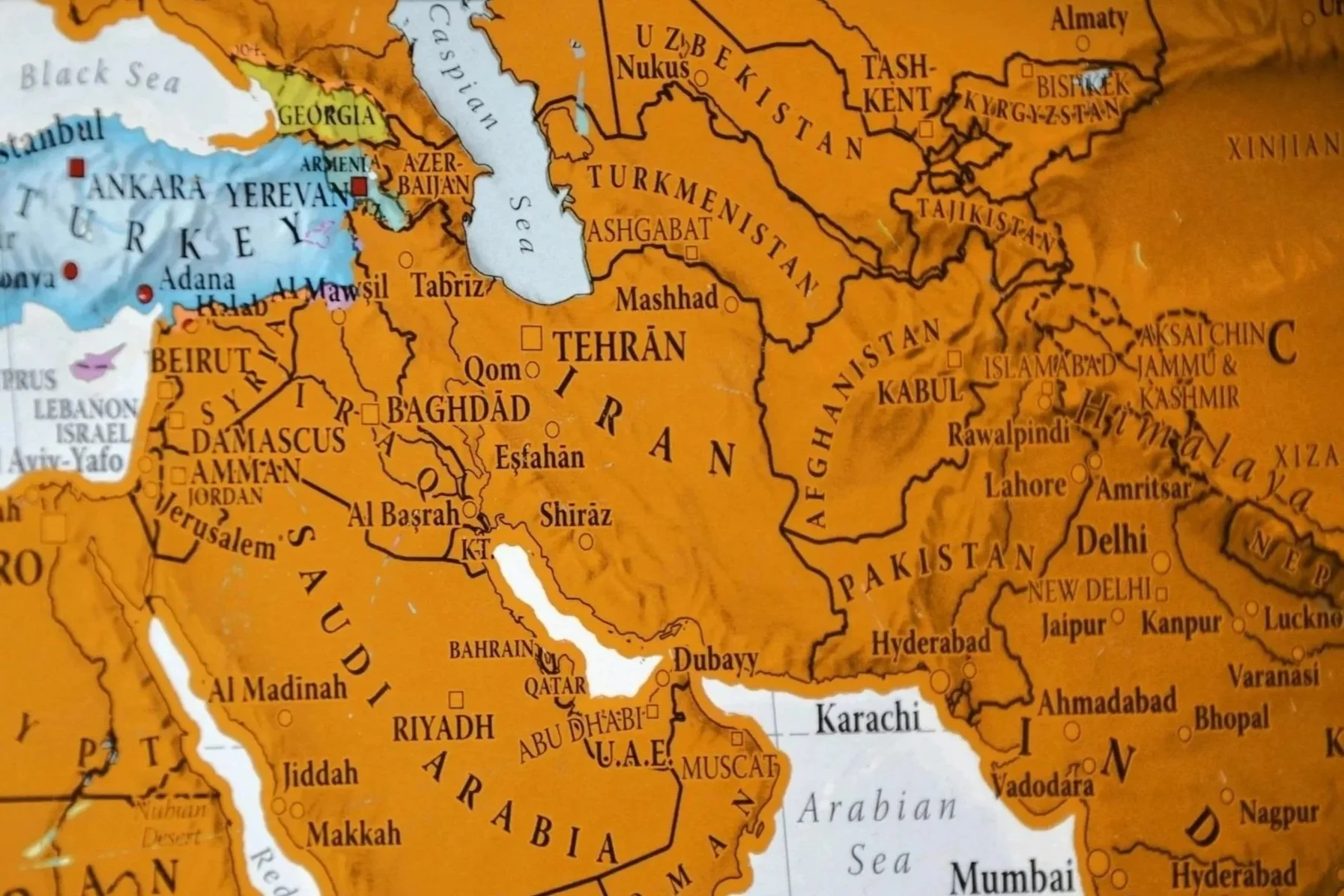
On February 28th, 2026, President Trump initiated a large-scale military campaign against Iran without authorization from Congress, raising urgent constitutional questions about the limits of executive power. Conducted in coordination with Israel, the strikes targeted Iranian cities and infrastructure and effectively marked the start of armed conflict between the United States and Iran. In the weeks since, the conflict and U.S. military involvement have only expanded, civilian casualties have mounted, and the administration has issued increasingly aggressive threats against Iran and its infrastructure, intensifying concerns about both the legality of President Donald Trump’s actions and their humanitarian consequences.
At the center of this controversy is a fundamental constitutional question over whether President Trump’s military actions violate Congress’s exclusive authority under Article I, Section 8 of the Constitution. While the president holds broad powers as Commander in Chief under Article II, those powers do not include the authority to initiate war absent an imminent threat to the United States. If President Trump’s actions amount to a de facto declaration of war without Congressional approval, then the military campaign in Iran represents both an unconstitutional act and a noteworthy expansion of executive power.
These questions reflect a broader historical trend in which presidents have increasingly asserted the authority to deploy military force without prior congressional approval. As Congress fails to either authorize or end the action in Iran, the balance of power continues to shift toward the executive, eroding checks and balances and establishing a dangerous precedent that the president can engage in sustained military conflict without direct democratic accountability or meaningful congressional oversight.
The war thus far has been marked by shifting justifications and escalating threats from President Trump. Initially, the administration framed the strikes as an effort to bring about regime change and respond to an authoritarian regime that had suppressed protests and killed civilians. Early attacks did kill senior Iranian leadership, including the Supreme Leader Ali Khamenei, but after weeks of conflict, they have failed to dismantle the Iranian regime. Since then, the Trump administration has cycled through other explanations for the conflict in an attempt to justify it to the American people and an international audience. The reasons include preventing nuclear development and dismantling Iran’s missile program. None of these rationales is supported by any evidence of an imminent threat from Iran that would justify and give the President power to take unilateral military action without congressional approval. President Trump has additionally, in his comments, suggested more expansive ambitions, including the possibility of controlling Iran’s oil resources, that do not involve any sentiment of protecting the U.S. from Iranian attack and would require prolonged and intensive military operations.
As the war has now entered its second month, its human and economic costs have intensified. Thousands have been killed across the region, including large numbers of civilians. At the beginning of the war, a Tomahawk missile manufactured by the United States struck an Iranian school, killing 168 people, including more than 100 children. President Trump denied U.S. responsibility for the attack, but investigations from multiple sources concluded that the missile originated from U.S. forces. Iran has also experienced a near-total internet blackout since the war began, severely limiting both communication for civilians and the ability for outsiders to see the conditions on the ground.
The escalating conflict has also been accompanied by increasingly explicit threats from President Trump against civilian infrastructure. In recent days, Trump warned that unless Iran agreed to reopen the Strait of Hormuz, “a whole civilization will die tonight” and that the United States would target bridges and power plants, actions which could constitute war crimes under international law. As of the evening of Tuesday, April 7, the United States and Iran reached a temporary two-week cease-fire that involves Iran permitting some passage of ships, but it is unclear what will come after or even during this ceasefire. The war’s end and Trump’s goals remain deeply uncertain. However it resolves, the Trump administration’s actions will certainly cause prolonged instability in Iran.
War powers, as designated by the Constitution, are deliberately divided between Congress and the executive branch. Article 1 of the Constitution establishes the legislative branch and vests it with certain explicit powers, including, as outlined in Section 8, the power to declare war. Section 8 reads “[The Congress shall have Power . . . ] To declare War, grant Letters of Marque and Reprisal, and make Rules concerning Captures on Land and Water.” Congress is given this sole power purposefully, as the founders were cognizant of the dangers of vesting in one person the immense power of initiating war. James Madison warned that the power and temptation would be too great for one man and would lead to “executive aggrandizement.” By placing the decision in the legislative branch, the Constitution ensures democratic accountability and requires public deliberation before entering into war.
The president, by contrast, is given certain powers as the Commander in Chief and in that role has authority over military operations, but not the ability to initiate war. Article II, Section 2, lays out the powers and role of the executive branch, and specifies that “the President shall be Commander in Chief of the Army and Navy of the United States, and of the Militia of the several States.” This role permits the direction of military strategy but does not extend to initiating war independently. When the president decides to deploy troops and initiate a war without congressional authorization, they act unconstitutionally, illegitimately, and without sufficient accountability to the American people.
Despite the explicit Constitutional provisions, the war powers of the President have expanded significantly over the 20th and 21st centuries. Congress has not issued a formal declaration of war since World War II, meaning that any subsequent U.S. military conflicts have proceeded without one. While some engagements have been authorized through congressional resolutions, presidents have increasingly acted unilaterally—acting first and asking for forgiveness after.
In 1950, President Truman committed U.S. troops to the Korean War without seeking congressional authorization. This action set a precedent for Presidents to launch military actions without approval and without a formal war declaration. Following President Richard Nixon’s unauthorized use of military force in the Vietnam War, Congress passed the War Powers Resolution in 1973 to reassert its authority. The Resolution requires the President, “in every possible instance”, to consult with Congress before introducing U.S. forces into hostilities, allowing unilateral action only in cases of a national emergency created by an attack on the United States, its territories, or its armed forces. It further requires that the president must report to Congress within 48 hours of deploying troops and must end said use of force within 60 days absent congressional authorization.
President Trump’s actions reflect an acceleration of this historical trend. By attacking Iran without prior authorization and in the absence of a threat, the administration appears to have violated both the Constitution and the War Powers Resolution. Although Trump submitted the required report to Congress within 48 hours, military operations have continued without authorization. Congress’s inability or unwillingness to enforce the War Powers Resolution and uphold the Constitution has enabled President Trump’s actions and allowed for further consolidation of power in the executive branch, weakening foundational checks and balances. President Trump’s actions in his second term have increasingly approached establishing unbridled power as the other two branches have proved unable to place real checks on his power, creating a worrisome precedent with harmful real-world effects.
Efforts to curtail the conflict through War Powers Resolutions directing the removal of U.S. forces failed in both the House and Senate. Even if such a measure had passed, it would likely have faced a presidential veto, requiring a two-thirds majority in the Senate and the House to override, an unlikely outcome given the political makeup of both chambers. While the administration announced a temporary cease-fire on April 7, it remains uncertain whether it will lead to a lasting end of hostilities. Even if it does, the damage, both human and institutional, has already been substantial and will likely cause long-term instability in the region.
President Trump’s effective declaration of war on Iran is unconstitutional and has produced devastating humanitarian consequences without any democratic accountability. Polling from February 2026 indicated that only 21 percent of Americans supported military strikes on Iran, but the president, in a vast overreach of his powers, initiated conflict despite this. This exercise of executive power has not only inflicted widespread suffering but has also eroded the separation of powers and weakened the principle of democratic oversight. The question remains of whether Congress can reclaim its constitutional role, particularly after the upcoming midterm elections.
Wesley Horn is a sophomore at Brown University studying History and Economics. He is an Associate Editor for the Brown University Law Review blog, and can be reached at wesley_horn@brown.edu.
Danny Moylan is a sophomore from Massachusetts studying Political Science and International/Public Affairs. He is a Staff Editor and Blog Director for the Brown Undergraduate Law Review and can be contacted at daniel_moylan@brown.edu.