Major Questions Doctrine: A Valid Check on Executive Overreach
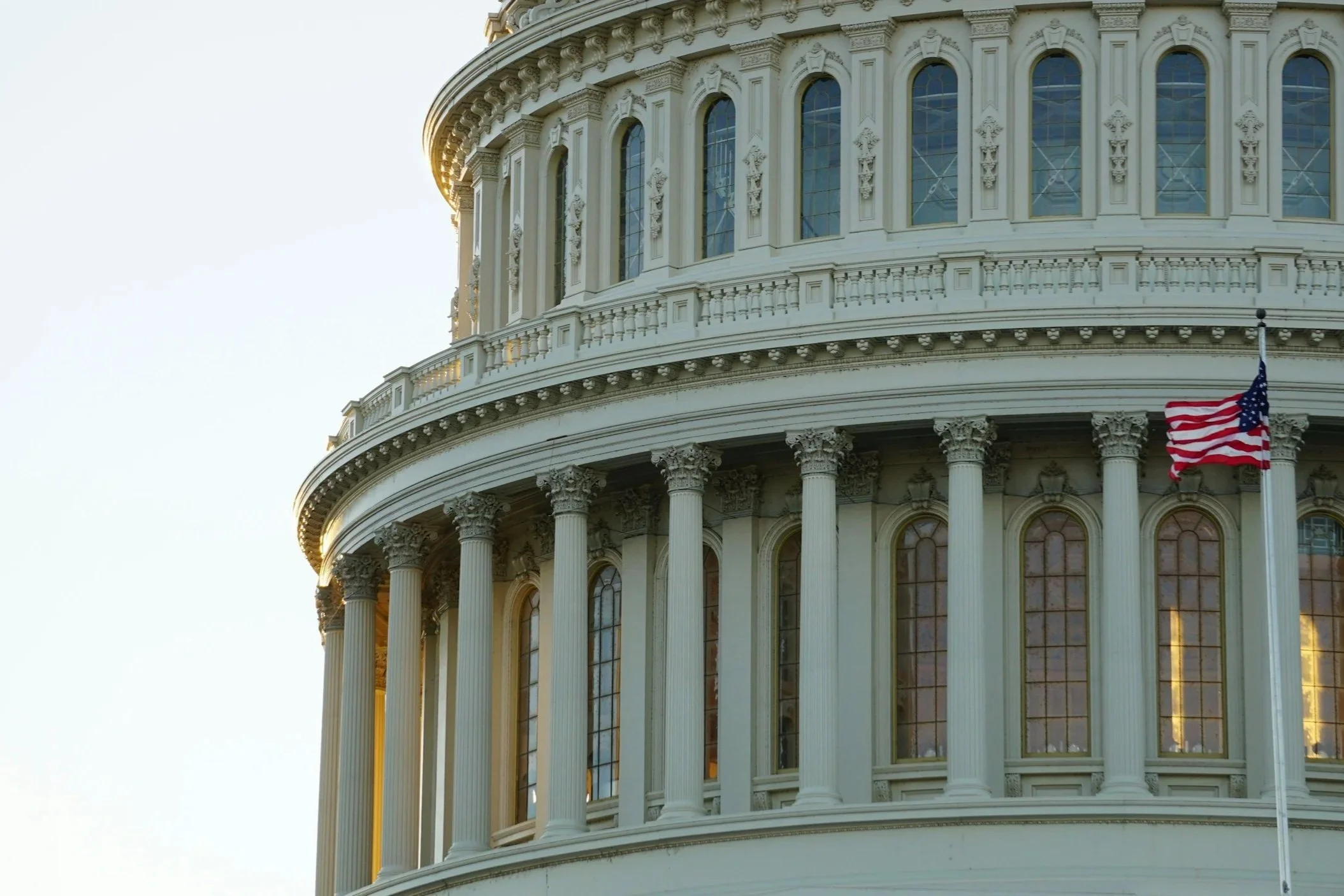
Credit: Stock Images
The U.S. has seen a steady increase in policymaking endeavors from the executive branch over the last couple decades, mainly in the form of agency rules or executive orders. It seems as though the entire direction of policy in America has become dependent on who is in the White House—a sharp departure from the intended legislative process posited by the Founders and in the Constitution. Whether due plainly to our growingly dysfunctional Congress or a combination of other factors, recent presidents have increasingly sought to bypass the legislative process by relying on old or overly broad statutes to enact monumental policies. Recent examples include President Biden’s national student-debt relief plan and President Trump’s sweeping international tariffs.
In response to this institutional drift of policymaking, the Supreme Court has increasingly relied on a specific judicial test to examine the legitimacy of such executive actions: The Major Questions Doctrine (MQD). This doctrine asserts that if the executive branch is “to decide an issue of major national significance, its action must be supported by clear congressional authorization.” Specifically, questions of “vast economic and political significance” are suspect if not grounded in overt statutory endorsement. During the Biden Administration, critics of MQD argued that the doctrine was employed repeatedly against executive agencies not as a check on executive encroachment, but as hostility toward liberal policies and the administrative state. Given the recent emergence of the doctrine’s explicit use and its regular application during the Biden presidency, I would not contend this belief to be irrational. However, with the recent litigation surrounding President Trump’s tariffs and the subsequent Supreme Court decision striking them down (partly based on MQD), it seems as though Major Questions Doctrine—applied evenhandedly—can operate as a neutral constraint on executive overreach in policymaking.
Viewed through this lens, the following analysis will argue that the Major Questions Doctrine is a net-positive development in Supreme Court jurisprudence. It serves as a bulwark of the separation of powers, preserving the responsibility of Congress to make important policy decisions and preventing the executive branch from utilizing broad or ambiguous statutory language to unilaterally reshape national policy. By requiring clear statutory authorization, MQD raises the legislative—and even political—costs of inaction, incentivizing Congress to legislate explicitly instead of relying on executive interpretations. The legitimacy of this argument—and of the doctrine itself—wholly depends on the principled and equal application of MQD over time to administrations of both parties. If, however, this condition holds true, the doctrine can serve as a valid check on executive overreach, putting Congress back in the driver’s seat of America's most important policy decisions.
Although only recently formalized as a named test, aspects of the Major Questions Doctrine have been used in Supreme Court decisions for multiple decades. Going back to 2000, the Court held in FDA v. Brown & Williamson Tobacco Corp. that Congress did not authorize the FDA to regulate tobacco products under the Food, Drug, and Cosmetic Act. Though on its face a case of seemingly regular statutory interpretation, much of the analysis resembles an early prototype of MQD. Justice O’Connor, writing for the majority, expressed hesitation toward the FDA’s claim of authority “to regulate an industry constituting a significant portion of the American economy.” Given the broad declaration of power under such an expansive reading of the law, the Court opted not to defer to the agency’s judgment under Chevron deference. This is one of the earliest cases where the Supreme Court expressed doubt toward a substantial claim of executive authority under debatable, if not entirely ambiguous, statutory authorization.
Building on this early skepticism, the Court in the 2010s began to articulate a more structured approach towards large claims of executive power. In Utility Air Regulatory Group v. EPA, the majority struck down an EPA regulation that required special permits be obtained for all “stationary sources” based solely on “potential greenhouse-gas emissions.” The Court reasoned that such a reading of the Clean Air Act would “bring about an enormous and transformative expansion in EPA’s regulatory authority without clear congressional authorization.” Subsequently, in King v. Burwell, the Court upheld an IRS rule that extended ACA tax credits to both state- and federally-created exchanges. The legal holding here, however, matters much less than the reasoning from a doctrinal standpoint; King marked a pivotal transition point in the development of MQD. Although the Court ultimately agreed with the IRS's reading of the ACA, the Court declined to apply Chevron deference, reasoning that the question presented was of “deep economic and political significance.” If Congress had assigned such an important power for agency interpretation, it would have done so “expressly.” Prior to this case, there was no explicit doctrinal rule for regulatory questions of particular significance; courts were merely skeptical of sweeping agency power with little statutory grounding. King, however, begins to turn this idea into a full-fledged jurisprudential principle—and into a carve-out with regard to Chevron. The Court recognized that with questions of major importance, it is unlikely that Congress implicitly delegated such broad decision-making authority. Thus, courts should not defer to those interpretations absent clear congressional authorization.
A number of scholars consider King as a primary bridge between the jurisprudential skepticism of big agency rules of the 2000s and 2010s and the official Major Questions Doctrine. This principle was fully realized in West Virginia v. EPA, where the Court officially required agencies to “point to clear congressional authorization for the authority it claims” regarding questions of particularly significant political or economic importance. Unlike earlier cases like Utility Air Regulatory Group or King—where the Court merely showed additional skepticism or refused to apply Chevron deference to claims of expansive executive authority without sufficient statutory grounding—West Virginia transformed these principles into a doctrine of affirmative constraint on executive (agency) overreach.
This short history of doctrinal evolution is both important to provide context as to what MQD is and how it developed over time, but also as refutation to a common criticism of the doctrine: that it is simply a made-up, conservative invention used to dismantle the administrative state and the policies of liberal administrations. This assertion is unpersuasive for two reasons. Firstly, the precedential record shown by the cases discussed above—and many more in between—displays a clear evolutionary timeline in which the explicit doctrine that emerged in West Virginia is clearly based in prior case law. Even if one disagrees with the substance of the doctrine on the merits (arguments that will be explored later) or even claims that it stretches Court precedent, it is difficult to sustain the claim that MQD was wholly invented as a conservative reaction to Biden-era policies. Second, the recent decision in Learning Resources Inc. v. Trump striking down the President’s extensive tariffs—and relying on MQD in part to do so—should provide evidence that the Court is prepared to apply the doctrine evenhandedly to administrations of both parties who overstep statutory authority in consequential areas of policy.
The specifics of modern MQD jurisprudence can help demonstrate why the doctrine is a net positive development for separation of powers and American governance in general. As was made clear in West Virginia, MQD doctrine operates as a clear-statement rule that requires explicit Congressional authorization for questions of major “economic and political significance.” The Court reaffirmed this principle in Biden v. Nebraska, which struck down the Biden Administration’s student debt relief plan under the HEROES Act—a statute that gives the Secretary of Education the authority to “waive or modify” aspects of individual “student financial assistance programs” under certain extreme circumstances. The majority reasoned that the statute had never been used by a Secretary to produce a policy of such magnitude and financial scope as the loan forgiveness plan at issue here.
Building on these principles, recent litigation can illuminate the doctrine’s development and scope. In addition to being the first explicit application of MQD to a Republican administration, Learning Resources provides some important elements of doctrinal evolution. Firstly, the facts of the case are very similar to those in Nebraska: a revolutionary use of an older statute creating a policy with huge economic consequences. Based on the precedents set in West Virginia and Nebraska, this is a paradigmatic “major question.” Second, and more notable, given this case directly implicated an executive order and not an agency rule, MQD does not merely apply to agencies—but to the President himself as well. In these cases, we observe that the recurring triggers for MQD include economic scope and significance, novelty of such a policy, and the inherent political saliency implicit in those two factors. We also see that MQD doctrine applies to the entirety of the Executive Branch, and is not merely a judicial ploy against the administrative state.
These decisions wholly portray a doctrine that protects the separation of powers created by the Constitution, protecting the ability of Congress to deliberate and decide themselves on the most pressing legislative issues facing the country. The legislative power was seen by the Founders as the most dangerous arm of the government—something that could easily spiral into tyranny. Because of this, much of the debate at the Constitutional Convention was over how to curtail the legislative branch of government. Bicameralism, the idea that the legislative branch is further divided into two chambers, was developed in response to this concern. The president was given the constitutional power to veto legislation for a similar reason: to check the Congress. The entire purpose of this design was to make it incredibly difficult to pass legislation, especially that of great magnitude. Given this difficulty, coupled with the increasing levels of Congressional gridlock, it seems convenient to bypass this inefficient process by having the President, and by extension their executive agencies, unilaterally implement such policies. Such an approach, though, undermines the Constitution’s allocation of legislative authority, no matter which party controls the White House. The Major Questions Doctrine is a sensible way in which the Judicial Branch can aid in the abandonment of executive-centric policymaking, returning the two political branches to their original constitutional prerogatives. This view, however, is not universal; many push back against the merits and use of MQD. I would like to explore such arguments now.
A common criticism of MQD is the indeterminacy and selective application of the test. Some critics argue that the term “major” is too ambiguous and awards judges too much discretion; judges may label whatever policy they dislike as a “major question” that will warrant heightened judicial scrutiny. Professors Leah Litman and Daniel Deacon further argue that interest groups may artificially increase political saliency of issues through ads or other forms of media, thus elevating issues they deem as important as “major questions” during litigation. With regard to the first claim of indeterminacy and ambiguity, there seems to be a degree of selective criticism. The judicial doctrines of “strict scrutiny” with regard to civil liberties, the “undue burden” test for abortion created by Casey (since overruled), and the “evolving standards of decency” test for the Eighth Amendment all leave judges with huge amounts of discretion. And while all judicial tests and decisions are not inherently ideological, these three doctrines have all been used to arrive at conclusions (see Grutter v. Bollinger, Whole Woman’s Health v. Hellerstedt, and Graham v. Florida respectively) embraced by groups critical of MQD, despite relying on similarly indeterminate standards. Moreover, the stipulation that interest groups will strive to increase the saliency of issues to artificially manufacture “major questions” is overstated; both President Biden’s student loan relief plan and President Trump’s tariffs, for example, were huge issues during their campaigns and respective elections. Therefore, with the indeterminate and ambiguous nature of many judicial doctrines and tests, these factors do not demonstrate MQD to be an illegitimate judicial tool.
Moving on to the second claim about selective application and possible judicial overreach, many argue that this test is employed for various extralegal reasons. Some scholars posit that the use of this doctrine is based on conservative, anti-regulatory political views; others maintain that the test subverts democracy by allowing unelected judges to have the final say in important policy decisions. Justice Kagan has even claimed the test to be a “get-out-of-text-free card” because of the purported selective application the doctrine lends itself to. First, it is important to reiterate that this entire argument is predicated on the notion that MQD is applied fairly and evenhandedly to administrations of both parties. If, however, there is a noticeable and significant difference in the future application of MQD, that is an issue with the judges applying the test—not the test itself. Yes, there is a level of indeterminacy with MQD; but as previously examined, many judicial tests have a similar level of ambiguity and we trust judges to be fair and sound in their application.
Even so, if huge, politically-divisive regulations with massive economic costs are implemented unilaterally, ensuring clear authorization from Congress is not anti-regulation—it is pro-Constitution. Large questions, unless clearly delegated, are better left to Congress for resolution. Statutes are inherently more stable across time compared to executive orders and agency rules; senators and representatives are much closer and politically accountable to their constituencies; and above all else, this structure of policymaking is what the Constitution demands. Therefore, in response to Justice Kagan, courts should not infer in ambiguous statutes the abdication of huge powers to the executive for the aforementioned reasons, even if the statute can be read in a specific way to provide such authority. If the authorization is not clear, courts should defer to the constitutional procedures for policymaking and not an executive-centric form of rule by decree.
Finally, on the issue of MQD being anti-democratic, the entire institution of the American judiciary is countermajoritarian by design, as laid out by Hamilton in The Federalist 78. Courts have acted as anti-majoritarian bodies for all of American history, striking down state and federal laws as fundamentally counter to our Constitution. This feature of judicial review is not a defect, but a necessary component of our constitutional system—one which ensures that momentary political majorities do not override constitutional protections or structures of power. When applied evenhandedly, this is precisely what MQD does: it maintains the separation of powers and prevents the consolidation of power into one branch of government. Therefore, like the indeterminacy argument, selective criticism of a principle or doctrine does not substantiate the claim of its illegitimacy.
The Major Questions Doctrine is not perfect, and reasonable objections have been raised against it over the last few years. But in a republic increasingly plagued by executive unilateralism and legislative paralysis, some judicial rule of this kind is necessary. If applied in an objective manner, such a doctrine may aid in returning our system of government to one based on separation of powers—one where Congress is put back in the driver’s seat of America’s most pressing legislative issues. As Justice Gorsuch wisely observed in his concurring opinion in Learning Resources, “if history is any guide [...] the day will come when those disappointed by today’s result will appreciate the legislative process for the bulwark of liberty it is.” The Major Questions Doctrine is not intended to disable government; it is meant merely as an instrument of structural protection, safeguarding the constitutional procedures that have maintained the American experiment for two and a half centuries.
Nik Greborunis is a sophomore concentrating in Political Science and Chemistry. He is a staff writer for the Brown Undergraduate Law Review and can be contacted at nikolas_greborunis@brown.edu.
Aidan Fogarty is a sophomore concentrating in International and Public Affairs. He is an editor for the Brown Undergraduate Law Review and can be contacted at aidan_fogarty@brown.edu.
Isabella Gardiner is a sophomore studying history. She is an editor for the Brown Undergraduate Law Review and can be reached at isabella_gardiner@brown.edu.