Religious Opt-Outs Are Becoming Informal Vetoes
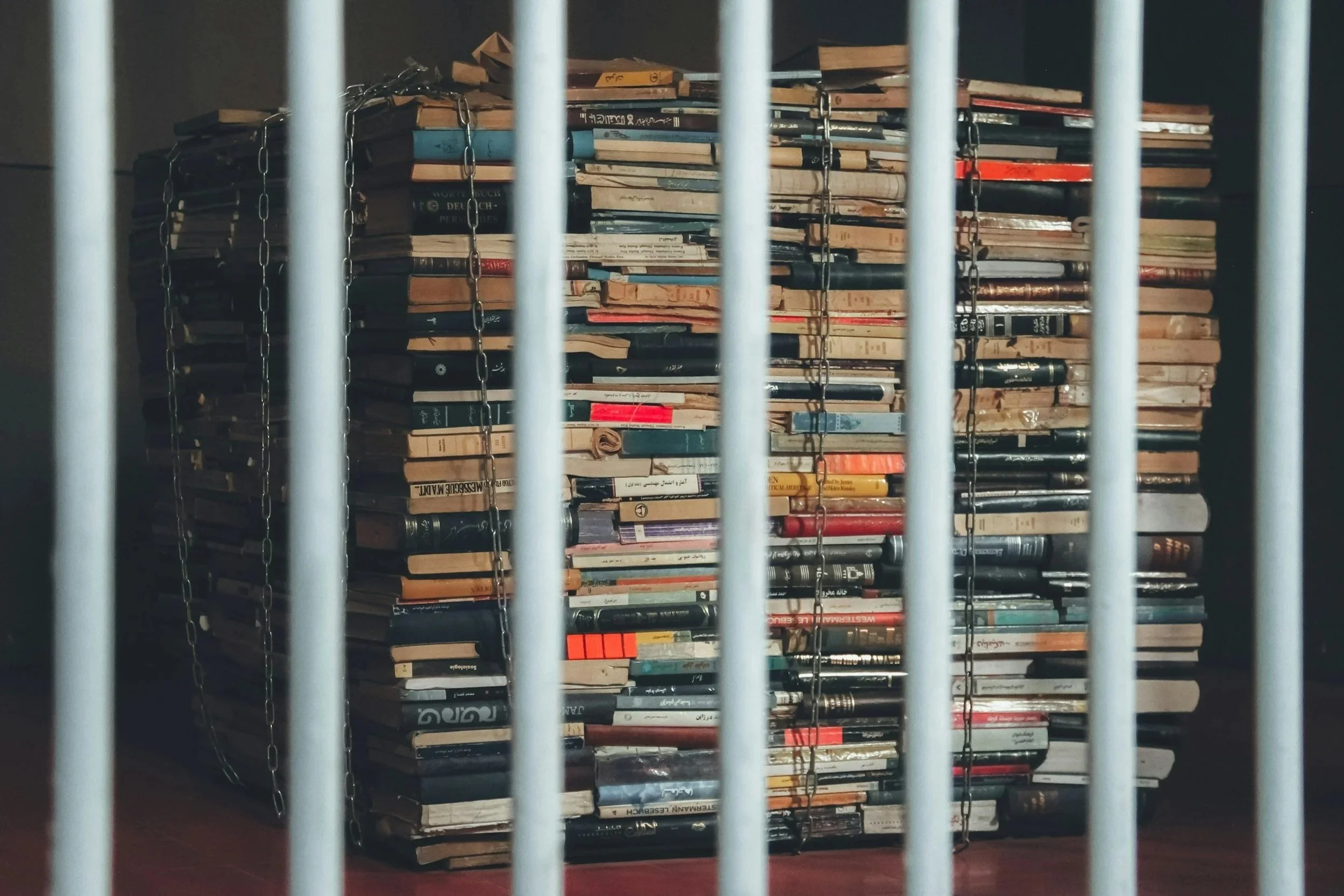
Credit: Stock Images
Suppose a public elementary school in a predominantly religious region assigns a story about a child with two mothers. After Mahmoud v. Taylor (2025), some families request a religious exemption, the principal arranges an alternative activity, and the remaining students hear the story. The next year, teachers choose a different one at a similar reading level that requires no notices, alternative assignments, or litigation. That year, no parent requested a ban, no court ruled a removal, the school simply exercised its discretion. As is its right by law.
Where is the line between religious accommodation and censorship?
The answer, as it were, by six of our nine Supreme Court justices, seems ostensibly straightforward. An accommodation excuses one student’s discomfort with material that conflicts with their and their family’s morals, whereas censorship inhibits the access of all students to the information, which is against our First Amendment rights as established by Board of Education v. Pico. The remainder of this post serves to argue, legally, that one very easily becomes the other. If contested instruction creates legal obligations that other instruction avoids by virtue of their obedience to the status quo, schools acquire an incentive to anticipate religious objections and act accordingly. Thus, individual exemptions hold the power to reshape everyone’s education without giving a single entity a formal veto. The individualized form of religious accommodations cannot establish that they preserve pluralism, particularly when the freedom to avoid instruction receives stronger constitutional protections than the freedom to encounter it.
The argument for accommodation begins with the legitimate concern about state power and its clash with individual freedoms as outlined in the Bill of Rights. Public schools exercise authority over children in the most formative years for their developing beliefs and opinions. In West Virginia State Board of Education v. Barnette, the Supreme Court invalidated the compulsory nature of a flag salute that was challenged by Jehovah’s Witnesses, under Justice Jackson’s logic of “no official, high or petty, can prescribe what shall be orthodox.”
More recently, Mahmoud v. Taylor held that parents who challenged LGBTQ-inclusive elementary school storybooks were entitled to be provided notice and an opportunity to opt out. The majority found an unconstitutional burden on religious exercise, considering the books, teaching impact, and children’s ages, and created a solution that did not involve banning them completely.
This remedy appears to preserve the interests of both sides and allow the schools to continue teaching while the families avoid the instruction they dispute. However, this arrangement depends completely on the school’s aversion to opposition and particular desire to retain the material.
School districts are often cash-strapped, understaffed, and stretched too thin, so an administrator might reason that another book, one less likely to raise objections, would simply be more cost-effective to teach. The district at the center of Mahmoud already experienced this burden firsthand; in March 2023, Montgomery County ended its opt-out policy, citing high absenteeism on days the books were used and the difficulty of keeping track of opt-outs. Justice Sotomayor’s Mahmoud dissent warned that administering these exemptions could incentivize schools to abandon contested content, exposing a weakness in the logic that assumes permission to withdraw cannot become pressure and incentive to remove. Considering two books, one depicting a family whose structure attracts no objections and one conflicting with some parents’ religious teaching, if selecting the second choice entails extra planning, potentially even litigation, the books no longer present equivalent choices. What this creates is a cyclical incentive structure that continues to recirculate the same, more “socially acceptable” viewpoints. The school need not agree with the objection, or have an ulterior motive/opinion. It needs only to prefer the less burdensome option.
The obvious response is that schools should have to retain “worthwhile” material and administer exemptions. On this view, managing opt-outs is simply a cost of running a public school, and a district that swaps out a book to avoid that cost has neglected its educational duty rather than exercised its discretion. But this response assumes an enforceable obligation to retain the material, which the argument has yet to establish.
Schools necessarily choose between books that serve similar instructional purposes. Hazelwood School District v. Kuhlmeier recognizes authority over school-sponsored expression when officials act for legitimate educational reasons. Essentially, schools have to choose what to teach. Without completely taking over decisions about educational value and curriculum, courts cannot easily require them to retain every challenged book. Furthermore, since school districts avoiding contentious material is a proactive rather than a reactive gesture, it’s almost impossible for the legal system to predict which books, out of a sea of options, could be or could not be considered; this is not to mention the fact that each school district currently has discretion over a large portion of classroom curriculum, and attempting to manage that centrally is a logistical nightmare. Furthermore, states are not monolithic, with vastly different demographics, and American political tradition dictates that local property taxpayers should have more direct say in how their money is spent through a school committee, which favors district-based curricula. Protecting an existing assignment does little to protect an assignment that administrators never make. This imbalance is built into the doctrine itself, as after Mahmoud, parents whose religious exercise is burdened by instruction can demand scrutiny and win an exemption, while a student who wants access to a book has no comparable claim, because no majority of the Court has ever recognized a necessary right to receive information in school. That freedom exists largely at the discretion of the states.
Nor does the right to receive information resolve this problem. In Board of Education v. Pico, Justice Brennan’s plurality opinion, which no majority joined, distinguished removing books from an existing school library collection from deciding which books to acquire. Even the plurality’s approach therefore leaves important selection decisions outside its protection. A school that anticipates religious objections before choosing its texts can then change the range of ideas students are able to encounter without undertaking the kind of removal that Pico addressed. In order for removal to even be proposed, there has to be a proposed book in question, and if this book is never even considered due to associated controversy, then the material is not even accessible to be protected. A right against certain exclusions in the name of education cannot guarantee access to material if the institution chooses never to provide it.
If exemptions are what make contested books more costly to handle, then one must evaluate the triggers of these exemptions, meaning coming to terms with the fact that Mahmoud’s decision drew a line in the sand, but perhaps in the wrong place. Following this logic, the Fourth Circuit actually applied the correct standard, even though the majority rejected it. Courts should require evidence that the school pressures students to affirm a conflicting belief that disparages their religious commitments or penalizes their refusal to agree, in accordance with the Free Exercise Clause of the First Amendment. But of course, this pressure is ambiguous and difficult to pinpoint, as it need not take the form of a signed declaration or explicit mandate; a child could experience repeated treatment of religious dissent as misconduct as a demand for conformity. But encountering an account of morality or family that differs from one’s own does not, without more grievances, establish that the school has demanded acceptance of a moral legitimacy.
Return, then, to the school that traded one storybook for another. Nothing in that choice would trouble a court, as no student was coerced, no book was pulled from a shelf and no parent asked for a removal outright. Mahmoud required the accommodation, Hazelwood protected the substitution, and Pico did not protect a book that was never assigned. Each doctrine, in isolation, does its job correctly, but together, they leave the most consequential decision, which selection of books is taught in the first place, beyond their individual or collective reach. If the distinction between accommodation and censorship has survived, it has truly survived in form only. As long as the freedom to avoid instruction is protected with more ardor than the freedom to encounter it, schools will continue to make this silent substitution, and the students who never meet the story will never know that they missed it.
Alexander Schramm is a Sophomore at Brown University studying Applied Math-Economics and International and Public Affairs. He is a Blog Writer for the Brown Undergraduate Law Review and can be contacted at alexander_schramm@brown.edu.
Aidan Fogarty is a junior from Geneva Switzerland studying International/Public Affairs and Entrepreneurship. He is an editor for the Brown Undergraduate Law Review blog and can be contacted at aidan_fogarty@brown.edu.
Michaela Hanson is a junior at Brown studying Economics and English, and can be reached at michaela_hanson@brown.edu.