Flock Camera Expansions Raise Series of Fourth Amendment Concerns
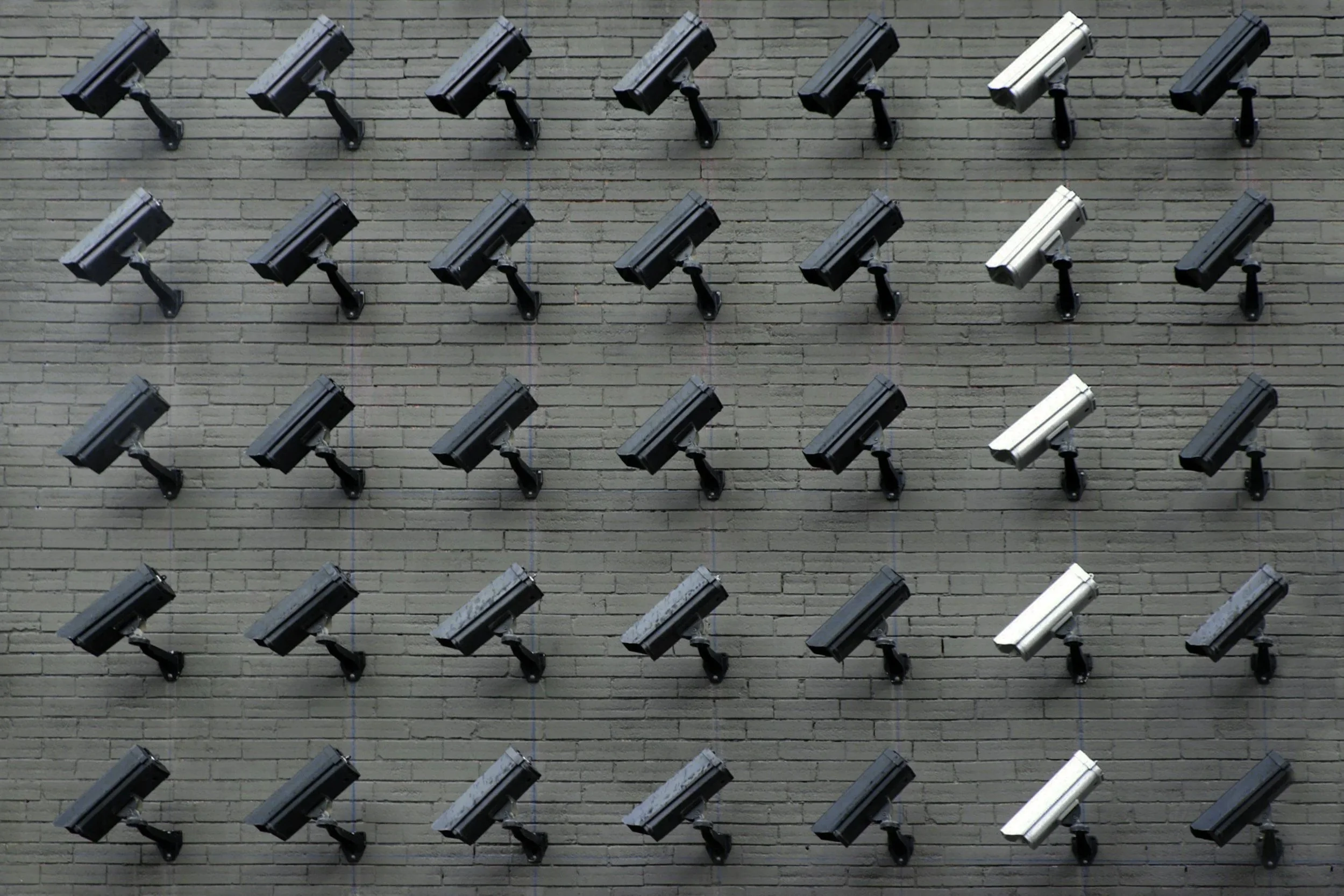
Credit: Stock Images
On April 8, 2025, Police stopped Eva Pizzarelli for an alleged traffic violation in Cumberland, Rhode Island. Upon learning of an outstanding warrant issued by Cumberland Police for evading arrest during an attempted traffic stop on March 26th East Providence Police arrested Pizzarelli and transferred her to the Cumberland Police Department where authorities processed and subjected her to 202 days of criminal proceedings.
The only problem, however, was that Ms. Pizzarelli was not in Cumberland, Rhode Island on March 26th. Her face and car had been falsely identified by an automated license plate reader (APLR), a highspeed surveillance camera that employs Artificial Intelligence to capture and record license plate data. This camera and many APLRs across the United States are manufactured by Flock Safety, an Atlanta-based security company that produces the largest network of APLRs uni the U.S. In recent years, these “Flock” cameras and other APLRs have expanded widely in their use nationally. Flock Safety specifically works with more than 5,000 law enforcement agencies, and has deployed more than 120,000 AI-powered automated plate readers across the United States.
The proliferation of AI-powered license plate readers has brought on series of concerning allegations of their abuse and misuse by officers in cases much more concerning than the simple misidentification of people like Eva Pizzarelli. In Georgia, a police chief used the technology to stalk his ex-girlfriend and her daughter roughly 600 times. In Texas, a deputy used 83,000 Flock cameras to locate a woman alleged to have had a medication abortion. It is important to note that these circumstances do not illustrate a failure of the technology itself; it is the unlawful manipulation of these tools by police that has led to such stalking. Broadly, the Institute for Justice displays over 250 national examples of APLRs' use resulting in stalking or other police misuse.
A swelling focus by civil liberties organizations on the abuse of APLRs have also raised a pressing constitutional question: how do the restraints of the Fourth Amendment's protection against unreasonable search and seizure operate in these vast systems of public surveillance? Could persistent surveillance of an individual with APLRs constitute a search, and therefore be presumptively unconstitutional without a judicial warrant?
The Supreme Court has so far declined to weigh in on the legality of warrantless pole camera surveillance (certiorari denied in Tuggle v United States). Nonetheless, there exists a valuable body of precedent we can use to carefully examine the constitutionality of warrantless pole camera surveillance with APLRs, such as is found in the Court’s landmark Katz v United States, and in later clarifications on surveillance technologies in cases such as Kyllo v United States and Carpenter v United States. Ultimately, based on existing case law, the constitutionality of pole camera use appears to fall along a gradient of concern to constitutional protections, with some use cases encroaching upon the Fourth amendment and others conforming with the Court’s standards for warrantless government surveillance. Because of this obscurity in such a gradient of legality, the Supreme Court must at last examine the issue of warrantless pole camera surveillance.
Briefly, the text of the Fourth Amendment guarantees “the right of the people to be secure in their persons, houses, papers, and effects, against unreasonable searches and seizures,” specifying that police may not conduct a search without a warrant founded upon probable cause. Courts have long interpreted this language to hold warrantless searches to be broadly unreasonable "notwithstanding evidence unquestionably showing probable cause” (Katz v United States).
The most clearly problematic use case of Flock cameras is long-term tracking of individual suspects using a vast system of cameras. In Carpenter v United States (2018), the Supreme Court considered the constitutionality of the warrantless acquisition of cell-site location records by police, records which retrospectively provide police with a comprehensive picture of someone’s location. With the police having collected nearly 13,000 location points over 127 days, the Court held that such warrantless data collection was in violation of the Fourth Amendment due to the “detailed, encyclopedic, and effortlessly complied” nature of data that “gives police access to a category of information otherwise unknowable.”
When police officials employ a network of Flock-style pole cameras to track an individual’s whereabouts, we see a reflection of many of the Court’s concerns in Carpenter. Indeed, the long-term use of pole cameras is detailed; their searchable databases make them encyclopedic, and the AI-powered tools have made the findings effortlessly compiled. With this data, the police gain access to a degree of detail on an individual’s whereabouts that would be otherwise impossible to legally obtain without a warrant. The long-term tracking of suspects allows officers to build a portrait of individuals’ daily habits, relationships and other intimate details. Without this technology, no officer could practically reconstruct such a mosaic of activity. Because the Supreme Court has established that “individuals have a reasonable expectation of privacy in the whole of their physical movement” (US v. Jones), the factual similarities to cell-site location data make the long-term tracking using APLRs an alarming breach of Fourth Amendment protections.
And while historical conceptions of the Fourth Amendment’s protections revolve around the "sanctity of the home" (Kyllo v. United States), the Court’s understanding of what can reasonably be viewed as private extend outside of the home itself. In the landmark 1976 ruling in Katz v. United States, in which police warrantlessly wiretapped a public phonebooth, the Court abandoned the "trespass doctrine” constraining the 4th Amendment to the home. The Court in Katz contended that the Fourth Amendment protects “people, rather than places” (Katz v. United States). This principle, that the Fourth Amendment protects people and not just places, bridges long-term tracking with Flock cameras well within the purview of the Fourth Amendment's protections.
However, less aggressive and aggregated forms of surveillance obscure the relationship between the Court’s understandings of privacy and poll camera surveillance. For example, when the government uses a single stationary camera to surveil the outside of a home, the issue of privacy is made more complicated by lurching into ambiguous standing within existing precedent. Once again, Justice Harlan’s now-famous concurring opinion in Katz tells us that a 4th Amendment search of a house does not occur unless an individual manifests a subjective expectation of privacy that society recognises to be reasonable. In essence, if someone takes steps to demonstrate a desire for privacy in an area of their home and that desire is generally socially agreed upon, such territory is protected from warrantless search.
Under this two prong test in Katz, then, targeted surveillance with Flock cameras would only be protected if the homeowner demonstrated affirmative steps to not desire surveillance outside of their home. This issue itself raises valid circumstantial questions. For example, does a fence alone qualify as a manifestation of privacy? Does aerial observation of that which is publicly exposed constitute a search? Lower courts have disagreed over the nuances of the legality of the flock-style camera use (see US v Tuggle, People v Tafoaya, US v Moore-Bush), and the only clear conclusion to be drawn is that stationary pole camera surveillance targeted at a an individual or household is unsettled.
None of the concerns raised, however, should be construed to interpret traditional surveillance camera technology as unconstitutional; there exists a distinction between police’s “traditional” limited use of pole cameras to make short-term observations and the previously discussed elongated surveillance methods. In fact, the court in Carpenter made sure to recognize that the court’s position on aggregated GPS surveillance did not “call into question conventional surveillance techniques and tools, such as security cameras”
What these several use cases of Flock style technology signify is that there exists a range of potential Fourth Amendment protections in regard to pole camera surveillance. As advocacy groups like the Massachusetts ACLU and lawmakers continue to scrutinize the role of ALPRs in the police toolkit, the importance of questions raised in this paper will only continue to grow in their importance. Ultimately, the legal issue at hand hinges upon the Supreme Court’s will to at last take up the issue of pole camera surveillance to settle the split circuits and state courts and create a nationally consistent standard. These disagreements among lower courts and an increase in public advocacy over the issue of pole cameras suggests that it is an unsettled issue of national importance, and the Court must provide both constitutional advocates and government actors the opportunity to settle the issue.
Timothy Sullivan is a freshman at Brown University studying Political Science. He is a staff writer for the Brown Undergraduate Law Review and can be reached at timothy_sullivan@brown.edu.
Connor Swenson is a senior at Brown studying Political Science. He is a staff writer for the Brown Undergraduate Law Review and can be reached at connor_swenson@brown.edu.
Azuri Brown is a freshman at Brown University concentrating in Philosophy, Politics, and Economics. She is a staff editor for the Brown Undergraduate Law Review and can be contacted at azuri_brown@brown.edu.