Legality of Maritime Insurance Pullbacks in the Strait of Hormuz
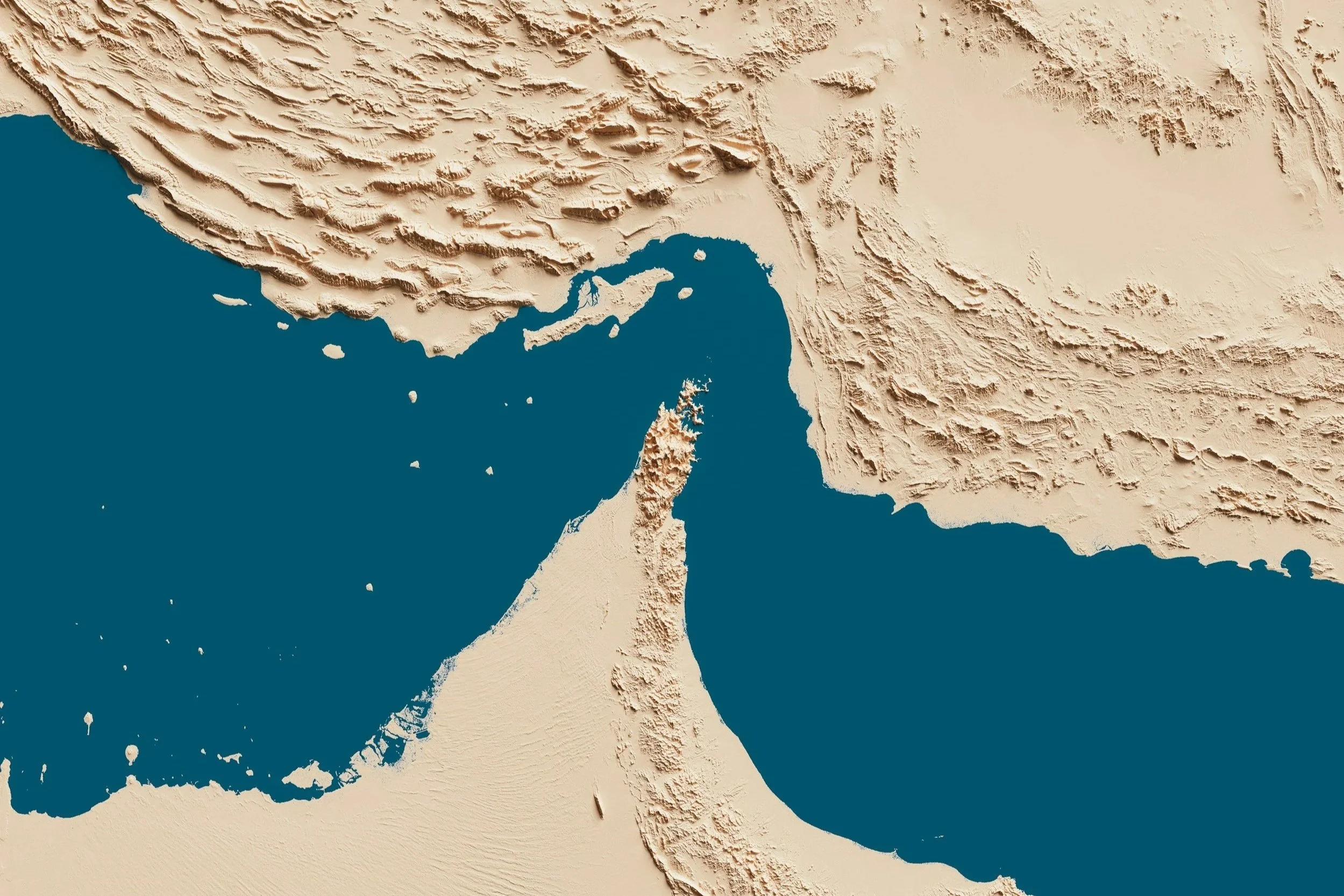
Credit: Stock Images
The Strait of Hormuz is one of the world’s most strategically vital maritime corridors and is widely recognized as a “transit passage” in the UNCLOS (Part III). As of March 2026, it has also become a hotbed of legal ambiguity and a commercially destabilizing conflict zone. Within a week of the United States and Israeli attack, at least nine ships were attacked in and around the Strait of Hormuz, and at least 3,000 ships were trapped with nowhere to go on either side of the strait. The coverage and analysis around the war justly focus on state actors. However, some of the most immediate economic consequences are occurring at a firm level and rippling to consumers worldwide. At this firm level, Shipowners, insurers, and charterers are navigating a worsening legal environment with significant financial exposure across several fronts, primarily in maritime insurance coverage. Although the immediate danger posed by the conflict in the Strait of Hormuz threatens vessel crew safety and impedes passage, an overlooked cause of vessels not transiting the Strait is unaffordable or canceled insurance coverage.
Meanwhile, Iran has employed a “selective passage regime.” This disrupts transit through the strait due to political and security considerations and directly challenges the widely accepted principle of transit passage under customary international maritime law, as the United Nations Convention on the Law of the Sea provides that innocent passage in international waterways should not be hampered by states bordering straits. Most maritime actors have long operated under the assumption that the Strait of Hormuz remains an international waterway open to continuous and unobstructed navigation. The recent conflict introduces not only legal uncertainty but also operational paralysis for private firms whereby voyages are being canceled due to this uncertainty. For shipowners, the concept of an “unsafe port” has become a critical legal tool. Under standard charterparty agreements, shipowners may refuse to follow a charterer’s order to enter a port or transit a route if doing so would expose the vessel to unreasonable risk. Traditionally, this standard has been applied under conditions such as war, piracy, or severe weather. The current situation in the Strait of Hormuz, however, pushes the doctrine into new territory due to the unpredictability and unforeseeable end to the conflict. Vessels may be delayed indefinitely under opaque enforcement practices or diverted at high cost. Shipowners are asserting that these cumulative risks meet the threshold of “unsafety,” thereby justifying refusal to transit the strait altogether.
Another source of security for contractors is a legal doctrine called “force majeure,”. The means by which this force majeure event is defined are relegated to each specific contract agreed upon between the parties involved, and “the ability to invoke the clause successfully, and the resulting contractual consequences, will depend on the wording and scope of the provision.” This is crucial for shipping insurers as it provides a legal basis to back out of contractual obligations. This creates significant holes in legal and commercial frameworks in periods of conflict, such as in Iran, as it pertains to insurance.
The crisis in Iran is significant and unprecedented for a variety of political and humanitarian reasons. It is also important to note the lack of an effective economic framework that typically stabilizes maritime commerce, especially in the insurance market. The current situation is exceptional for insurers, as firms cannot rely on a predictably enforced system. Insurance markets, historically a key mechanism for absorbing uncertainty, are amplifying instability by retreating from coverage with a key leades in this shift being Lloyds of London. This has caused war risk premiums to surge, and in some cases coverage has been withdrawn or narrowed altogether, particularly for voyages transiting high-risk areas. In some cases, premiums have increased by 1,000%. The result is that voyages may remain technically feasible but become commercially impractical without adequate insurance backing.
This breakdown is already affecting global supply chains, especially in the oil market. Certain reports have highlighted the increased costs associated with such disruptions. For example, just on the sixth of April, “Two LNG tankers carrying Qatari gas turned around after attempting to cross the strait eastward”. This has caused several ships to “go dark,” in other words, to turn off navigational lights; however, this creates legal liability and could invalidate their insurance policies. Smaller firms, which lack the liquidity to self-insure or withstand prolonged contractual disputes, are further exposed. On the other hand, larger firms face mounting reputational and fiduciary constraints when considering operational risk in the region against contractual obligations and shareholder expectations.
This has necessitated that shipping firms proactively review their contractual obligations and take precautionary measures regarding their insurance policies. For example, shipping companies may be in noncompliance with their contracts even where no losses or damage have occurred. Specific methods to ensure compliance include reviewing time periods to address insurance breaches and confirming notice requirements before lenders can accelerate loans. However, these day-to-day assurances are not sustainable within the context of a long-term conflict.
The reaction from the federal government has provided some certainty in the face of insurance rollbacks, but it is largely insufficient to the growing paralysis in the Gulf. To counteract the economic effects of policy cancellations, the Trump Administration has used the DFC (US International Development Finance Corporation) to provide political risk insurance for maritime trade in the Persian Gulf. However, the DFC has only promised coverage for losses up to $20 billion USD. In contrast, predictions estimate “$13 billion in monthly economic damage, combining export losses and disrupted imports”, meaning that total losses could surpass the DFC’s plan. This framework is reflected in other countries, such as India, which is planning to issue sovereign guarantees to support insurers in the Persian Gulf and counter the impending insecurity; the plan includes a 1.5-billion-dollar fund to help settle insurance claims.
While initially the safety of seafarers was a primary concern and a catalyst for canceling voyages, rising premiums and insurance policy cancellations are now a leading disruption in voyages in the Persian Gulf. International governance of such waterways has become a key factor in economic disruption, with effects that reach far beyond the strait and the region as a whole. Oil companies, shipowners, and insurers are having to assume the role of risk managers, and legal doctrine regarding maritime security is having secondary economic effects on rising global prices. In conclusion, the economic and legal implications of conflict in the Strait of Hormuz as of April 2026 highlight the importance of global commerce and insurance considerations in the context of war in the Middle East.
Elina Coutlakis is a sophomore at Brown University studying International and Public Affairs and Economics. She is a staff writer for the Brown Undergraduate Law Review and can be contacted at elina_coutlakis-hixson@brown.edu.
Isabella Gardiner is a sophomore studying history. She is an editor for the Brown Undergraduate Law Review and can be reached at isabella_gardiner@brown.edu.
Michaela Hanson is a sophomore studying economics and English. She is an associate blog editor for the Brown Undergraduate Law Review and can be reached at michaela_hanson@brown.edu.