Examining Human Heritage Protections in International Laws through the Lens of Cultural Property Damage in the 2026 Iran Military Conflict
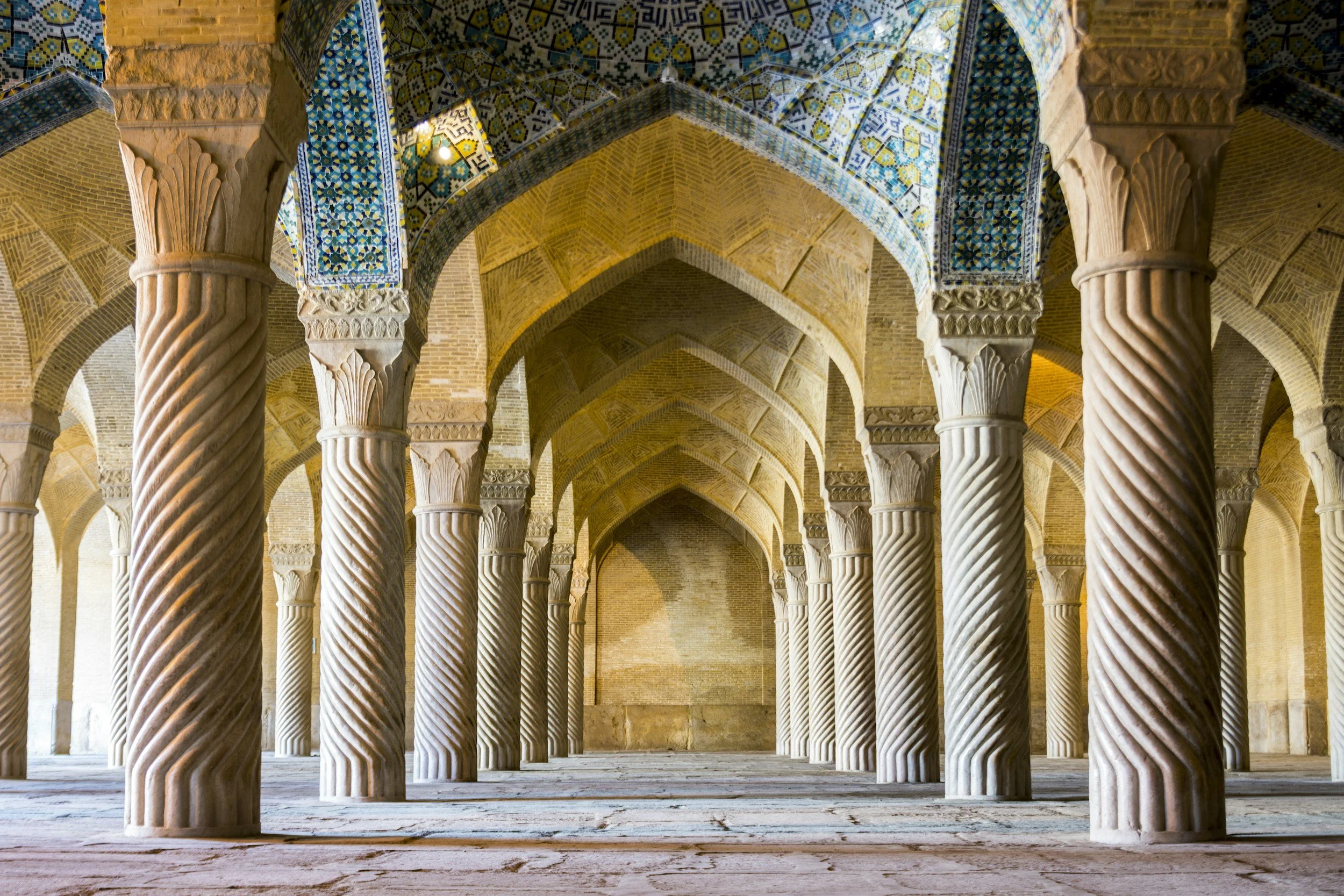
Credit: Stock Images
On February 15th, 1944, the Allied Forces, primarily composed of American bombing aircraft, destroyed the Abbey of Monte Cassino, believing that German troops were hiding within the monastery’s walls. To the dismay of the Allied Forces, there were no German forces in the monastery; there were only hundreds of civilians seeking protection in the monastery’s hallowed halls who died instead. The Abbey of Monte Cassino was established by St. Benedict in the early-6th century and was the location where the monastic saint founded the Rule of St. Benedict, a guideline for Benedictine life. Monte Cassino’s significance to the course of Western civilization cannot be overstated, yet the monastery’s destruction and subsequent reconstruction during the Second World War was not an isolated event in its history. Indeed, the Abbey was frequently destroyed and rebuilt; it was attacked by the Lombards just a few decades after its construction, burned and pillaged by the Saracens in the 9th century, and sacked by French troops during the French Revolutionary Wars. Monte Cassino illustrates a recurring pattern: in moments of perceived military necessity, societies often destroy the very cultural heritage they claim to value. The repeated historical torment and anguish to the structure of Monte Cassino serves not as a justification of its destruction but instead shows how former injuries do not always lead to an absolute reluctance to deter future harm.
This response now turns to the damage to works of human heritage during the 2026 Iran military conflict, which has been much less ruinous than the destruction of monuments during the Second World War, though concerning nevertheless. As of the date of this response, Iran’s Minister of Heritage, Tourism, and Handicrafts has claimed that 131 landmarks of cultural property have been damaged. Given the political nature of the conflict, such a figure should immediately be investigated. A more reliable number can be found by looking at the interactive map for recently-damaged cultural monuments created by the Center for Ancient Middle Eastern Landscapes Lab at the University of Chicago, which has documented 69 entries of damaged landmarks on its site. Notably, the figure generated by the lab does not take into account the scale and extent of the damage to the works.
Despite the numerous instances of harm to cultural property, there are international guidelines intended to prohibit such destruction. This response will examine these international laws on cultural heritage by beginning with tracking their history and their application to the present conflict in Iran. The article will conclude by then analyzing the extent of the damage to the works of cultural property articles by using the images and reports of the impairment to specific monuments to determine whether such international guidelines on preventing the destruction of cultural heritage during wartime have been violated in the current armed conflict.
History of Human Heritage Norms and Laws
To understand how such damage is evaluated today, it is necessary to examine the historical development of legal norms governing cultural heritage in wartime. The continual attacks on the monastery of Monte Cassino throughout time may seem to suggest that concepts of the protection of human heritage during conflict are a novel idea, but this is not the case. As early as Ancient Rome in 70 B.C., the orator Cicero began a suit against Gaius Verrus, the Roman governor of Sicily, for his excessive plundering and looting of various cities in Sicily. Centuries later, the father of international law, Hugo Grotius, wrote his 1625 magnum opus On the Laws of War and Peace, a seminal work that set the intellectual groundwork for the Peace of Westphalia in 1648. Interestingly, one can actually find Hugo Grotius on the frieze adorning the courtroom of the United States Supreme Court, where he holds his On the Laws of War and Peace. In this deeply influential book, Grotius argues that “There are some things of such a nature, as to contribute, no way, to the support and prolongation of war: things which reason itself requires to be spared even during the heat and continuance of war… Such are Porticos, Temples, statues, and all other elegant works and monuments of art” (Paragraph Five, Chapter Twelve, Book Three). Grotius takes a rather extreme position for arguing that even as tensions “heat” and become increasingly hostile and even as the war drags on, “reason” compels the combatants on the field to leave alone “monuments of art.” Grotius then cites Polybius, who explains that destroying “monuments of art” neither weakens the strength of the enemy nor enhances the strength of the ravager. As well as citing Polybius to support his point, Grotius also cites precedents for protecting and sparing cultural heritage during wartime from other classical authors, including Cicero, Thucydides, and Livy. While Grotius appears to condemn the destruction of all monuments of art during wartime, he pays particular attention to religious and funerary monuments. Grotius argues that sparing “divine things” is an act of reverence and shows respect for the divine, which also implies the inverse: that destroying religious sites is an affront to what is sacred. Grotius then shifts his remarks towards monuments made to honor the deceased, arguing that destroying these works would be a “total disregard to the laws and ties of our common humanity.” This language about “common humanity” and the shared ties between them through our cultural heritage is language frequently used by international treaties and no doubt draws from Grotius to a great extent. Grotius concludes his discourses calling for the defense of cultural heritage by repeating his aforementioned claim that “rules and practices [of war] derive much of their merit from the utility” and that destroying works of art and architecture lacks a clear utilitarian justification. While Grotius provides the cornerstone for international regulations on cultural preservation during wartime, it is worth noting that his unconditional condemnation of sacrificing cultural heritage during military conflict is much more extreme than most current guidelines, including the Hague Convention on Cultural Property, which offers exceptions to allow for cultural property damage under certain wartime circumstances.
Hague Convention for the Protection of Cultural Property in the Event of Armed Conflict
Perhaps the most important contemporary treaty protecting art and architecture during military conflicts is the 1954 Hague Convention, which pertains to the topic of cultural property and was signed following the devastation to cultural monuments like Monte Cassino. The 1954 Hague Convention serves to protect works of “movable or immovable property,” such as artworks, architecture, archaeological sites, manuscripts, or scientific and archival collections through a multilateral agreement to deter their destruction. Notably, the convention also led to the creation of the Blue Shield, an emblem that identifies certain locations as cultural property. The Blue Shield emblem was placed in various cultural sites in Iran, such as the Tomb of Baba Tahir, the Naqsh-e Jahan Square, and the Golestan Palace.
The overall purpose of the 1954 Hague Convention can best be summarized in the first paragraph of article four of the convention, which states that “The High Contracting Parties undertake to respect cultural property… by refraining from any use of the property and its immediate surroundings… which are likely to expose it to destruction… and by refraining from any act of hostility, directed against such property.” While the convention seems Grotian at first in its desire to protect cultural property by avoiding “any” and all “act[s] of hostility” towards it, the next paragraph states that the obligations may be waived if there is an imperative “military necessity.” Given the vagueness of terms like “military necessity," the 1954 convention was revisited and clarified by two Protocols in 1954 and 1999. This Second Protocol from 1999 defines “military necessity” in somewhat explicit terms, claiming that the destruction of cultural property in times of “military necessity” may be justified if two conditions are met. Firstly, the cultural property must be a “military objective” to warrant its destruction. Secondly, there must be no “feasible alternative available to obtain a similar military advantage.” Under Article I of the Second Protocol, a "military objective” is anything that could make a substantial contribution to the military effort and whose “total or partial destruction” would provide a “definite military advantage.” The notion of a “definite military advantage” is a bit nebulous given the amount of secrecy involved in military action, but it can be implied that the Second Protocol defines what constitutes a "definite military advantage” in relation to the available strategic and military intelligence at the time of the attack. The Second Protocol also adds a clause about the consequences for violation of the agreement by stipulating that there will be "criminal responsibility” for breach of the Protocol, but the enforcement mechanisms for these penal consequences are unclear. Realistically, it might have been more reasonable to enact economic penalties for violations of the Protocol that the nations who signed onto the treaty would agree to abide by, but such measures were not considered in the Protocol. Because the strike targeted a legitimate military objective and the resulting damage to Golestan Palace appears limited and incidental, it likely falls within the Convention’s ‘military necessity’ exception rather than constituting a violation. Overall, the Hague Convention for the Protection of Cultural Property in the Event of Armed Conflict is a foundational international treatise to prevent future loss to cultural heritage, though it contains notable exceptions that permit the damage under certain circumstances.
Monuments of Cultural Property Injured in Iran
There are various cultural landmarks that have come under injury during the military conflict with Iran, but some of the most concerning damage has occurred at the Golestan Palace in Tehran, the Great Mosque of Isfahan, and the monuments surrounding the Naqsh-e Jahan Square.
The Golestan Palace in Tehran is a UNESCO World Heritage site and the historical royal residence of the Qajar dynasty (1789-1925), the dynasty that preceded the Pahlavi, the last ruling dynastic house of Iran. In early March, the Golestan Palace was damaged by the debris of the US-Israeli air strikes on Arg Square. Notably, the air strike was not intended to damage the palatial complex—which is a crucial point of importance. The 1954 Hague Convention includes a section titled “Declarations and Reservations,” where nations clarify interpretations of various provisions and define the boundaries of their legal obligations under the agreement. While Israel does not have anything listed under “Declarations and Reservations,” the United States of America lists an important line that “allows all property to be attacked using any lawful and proportionate means, if required by military necessity and notwithstanding possible collateral damage to such property.” The condition about “collateral damage” is important because the damage to Golestan Palace was an unintended consequence from a nearby attack. That being said, aside from intent, there is another factor: the proportionality of damage. The convention allows the property to be attacked using “lawful and proportionate means,” meaning that the expected damage to cultural property does not exceed the expected military advantage. Thus, it still needs to be determined whether the attack near Golestan Palace was “proportionate” to the particular military necessity. In the case of Golestan Palace, the strike appears to have been aimed at a legitimate military objective, suggesting a plausible military advantage, given that the attack on Arg Square was intended to strike Iranian military buildings. The damage to the structure of Golestan Palace also appears relatively minimal and confined to a select few spaces, namely the Mirror Hall and Marble Throne Hall, which seem to have suffered notable damage, including broken windows, collapsed wooden carvings, and shattered stained glass decoration. In the Marble Throne Hall, the Qajar-era Marble Throne commissioned by the eminent Fath-Ali Shah has been damaged, as some of the smaller marble figures have been blown off. Most of the images that have resurfaced have centered on the Mirror Hall and Marble Throne Hall, making it seem like the damage was limited to these spaces and perhaps a select few other areas. While UNESCO issued a statement of concern over the destruction to Golestan Palace, the reality is that the attack does not seem particularly far-reaching in scale, especially for a non-intentional attack. Golestan Palace is a massive structure composed of eight separate royal palace structures and eight museums, making the entire area about 13 acres in size. Golestan Palace remains more or less entirely intact in all its structures with some minimal, unintentional damage to the Mirror Hall and Marble Throne Hall. Thus, while UNESCO’s concern is reasonable given the historic significance of the Marble Throne Hall and Mirror Hall, the air strikes that impacted these spaces as collateral damage do not appear to have breached the 1954 Hague Convention.
Additionally, while there are other international agreements surrounding the protection of cultural property during wartime aside from the Hague Convention of 1954, these other agreements primarily reiterate the message from the Hague Convention. Both the Rome Statute of the International Court and the Geneva Conventions and its two Protocols in 1977 primarily reinforce the framework of the 1954 Hague Convention. The Rome Statute, for instance, uses the language and terminology of the 1954 Convention, including phrases such as “military necessity” and “military objectives.” While the Rome Statute includes the intentional destruction of non-military objective works of cultural property under its list of war crimes in Article VIII, there are few substantial changes to the actual framework for protecting cultural property since the 1954 Hague Convention. Indeed, the International Criminal Court's “Policy on Cultural Heritage” writes that “it is well established, for instance, that cultural property meeting the requirements of the 1954 Hague Convention and/or the 1999 Second Protocol may only be exposed to certain forms of dangerous or potentially destructive conduct when military necessity so requires.” Thus, it is clear that the 1954 Hague Convention still provides the central framework of international treaty law for cultural property.
Finally, this essay examines the potential damage to the Great Mosque of Isfahan, which commands an incredibly important spot within architectural history. The Great Mosque of Isfahan is considered the forerunner and birthplace of the four-iwan mosque, a particular rectangular architectural arrangement that offsets four iwans, large vaulted open areas, on each side of a central courtyard. Reports have indicated that there has been damage to the Great Mosque of Isfahan, namely to its faience tilework, out of the desire to destroy nearby nuclear infrastructure. The damage to the Great Mosque of Isfahan and similar landmarks is concerning because these landmarks not only represent the cultural heritage of a particular nation, but symbolize cornerstones of a global architectural vocabulary and are profoundly canonical works of art history. Once again, the same conditions on collateral damage appear to apply here as well, and the damage does not appear to have been clearly excessive or disproportionate in any respect. While the current damage to landmarks of human heritage as a result of the airstrikes does not appear to reflect a breach of the 1954 Hague Convention, there should be caution for possible conflict escalation. This cause for concern is especially pertinent given some of the president’s former comments about targeting Iran’s cultural sites as military objectives; for example, in 2020, President Trump claimed that the US would strike sites that were "at a very high level and important to Iran and the Iranian culture" if Iran directly endangered American interests. However, at the present moment, there is a much greater concern about ensuring the protection of human heritage from patently violent actors, such as terrorist groups like ISIS, who nearly fully destroyed the entire ancient city of Dura-Europos in 2014 and Palmyra in 2017. Golestan Palace, the Great Mosque of Isfahan, and the various other cultural heritage sites in Iran remain intact and well-preserved with minimal and unintentional damage to certain areas; Dura-Europos and Palmyra have been razed to the ground.
Conclusion
Even with the numerous international laws set into place to prevent harm to monuments of human heritage, the key factor in ensuring the protection of cultural property stems from individual actors and people themselves. With that in mind, it is worth ending where the response began: Monte Cassino. Just a few months after Monte Cassino was tragically demolished in 1944, the Allied Forces moved towards the city of Sansepolcro, Italy and were given orders to shell the town because the Germans occupied the city. However, the English officer Tony Clarke defied his orders to open artillery fire because he remembered reading a passage by Aldous Huxley about how the “best picture in the world,” Piero della Francesca’s 1465 fresco The Resurrection, was located just inside the small town of Sansepolcro. Eventually, the Germans retreated from Sansepolcro, and due to the actions of Tony Clarke, Piero’s painting was saved and given new life, a fitting fate for a painting of Christ’s Resurrection from death. Grotius’s On the Laws of War and Peace or the Hague Convention for the Protection of Cultural Property can all be reduced to words on pieces of paper with few realistic enforcement mechanisms. It requires both the collective action of individuals to hold governments accountable for their actions and the individual actions of those with authority to be willing to temperately restrain themselves for the greater good of all.
Parsa is a junior at Brown University studying Political Science and the History of Art and Architecture. He is a writer for the Brown Undergraduate Law Review and can be reached at parsa_zaheri@brown.edu.
Aidan Fogarty is a sophomore concentrating in International and Public Affairs. He is an editor for the Brown Undergraduate Law Review and can be contacted at aidan_fogarty@brown.edu.
Priyanka Nambiar is a sophomore concentrating in Cognitive Neuroscience. She is an editor for the Brown Undergraduate Law Review and can be contacted at priyanka_nambiar@brown.edu.