The Trump Administration’s Play: Use Native American Law to End Birthright Citizenship
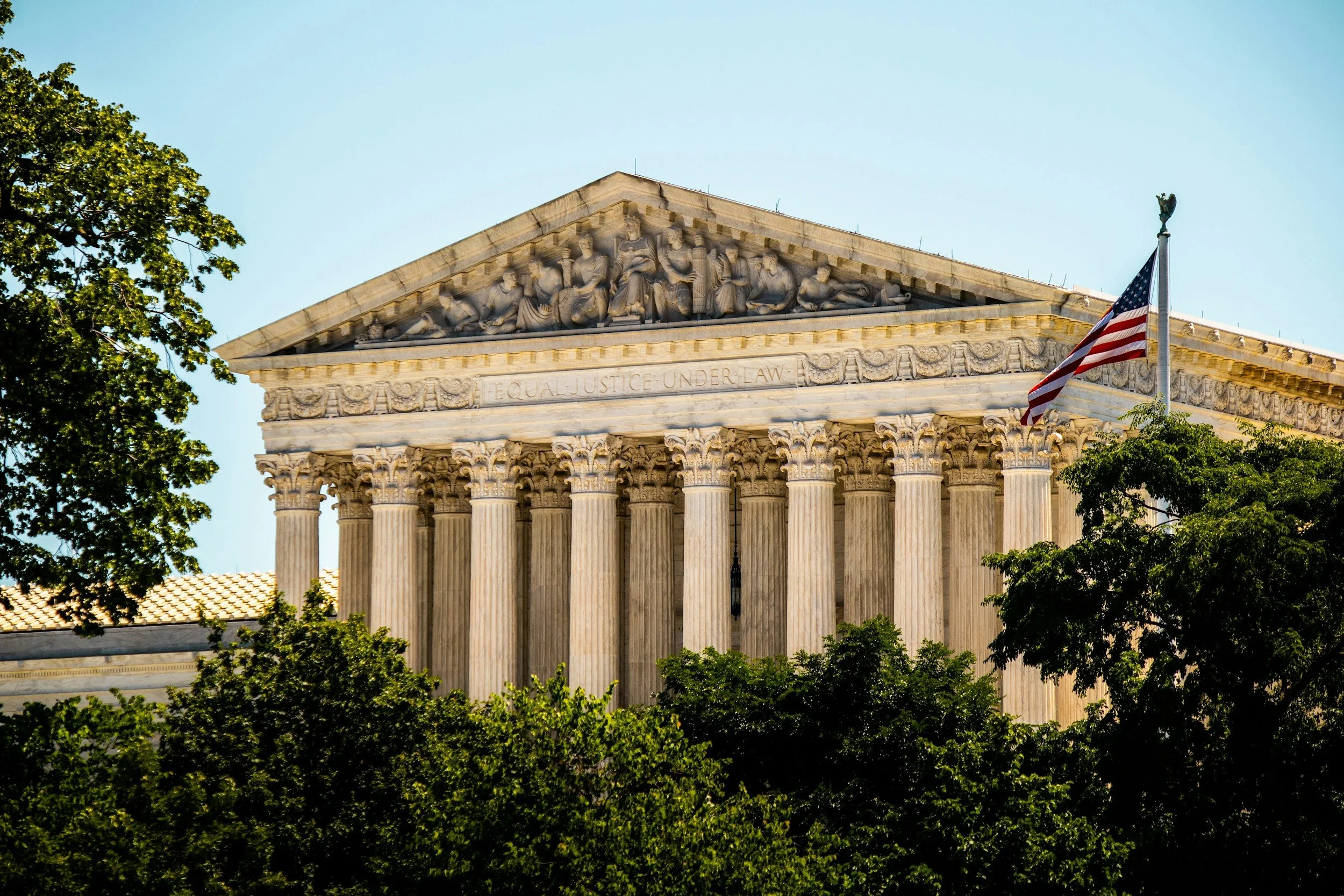
Credit: Stock Images
At oral argument in Trump v. Barbara on April 1, 2026, the Trump Administration offered a theory of the Citizenship Clause that is more novel than its public messaging suggests. Publicly, the case is framed as a fight over undocumented immigration and “birth tourism.” But in court, Solicitor General D. John Sauer advanced a much more ambitious claim: that the Fourteenth Amendment has never guaranteed citizenship to everyone born on U.S. soil, and that the key limitation is not merely territorial birth but the parents’ “direct and immediate allegiance” to and “lawful domicile” within the United States. In other words, the Administration is not simply asking the Court to cut back United States v. Wong Kim Ark, which solidified birthright citizenship in the States. It is instead asking the Court to constitutionalize a hierarchy of belonging based on parental status. To do that, it is relying on an old body of Native American citizenship law as both precedent and analogy.
The administration’s argument depends on taking a historically specific legal status once applied to tribal Indians and repurposing it as a general constitutional template for modern immigrants. The older rule was not a free-floating principle that anyone with incomplete allegiance falls outside the Fourteenth Amendment. It arose from the United States’ unique government-to-government relationship with tribal nations. The Civil Rights Act of 1866 declared citizens to be persons born in the United States and “not subject to any foreign power,” while expressly “excluding Indians not taxed.” The Fourteenth Amendment then replaced that phrasing with “subject to the jurisdiction thereof,” and nineteenth-century debates treated tribal Indians as a distinct category because they possessed their own recognized sovereign authority, internal governance, and nation-to-nation legal relationship with the United States.
The critical precedent here is Elk v. Wilkins (1884), which held that John Elk, a Native man born into a tribe, was not automatically a citizen under the Fourteenth Amendment after leaving his tribal community and living among non-Indians in Omaha. The Court reasoned that persons not subject to U.S. jurisdiction “at the time of birth” could become citizens only through naturalization or a comparable collective act. Whatever one thinks of Elk as constitutional interpretation, it rested on the premise that tribal Indians occupied a sui generis political position because of their independent tribal sovereignty. It did not hold that persons born in the United States to foreign nationals generally lack citizenship unless their parents have “lawful domicile.” But that is the leap this administration is attempting to make.
The government’s effort to build that bridge is also hard to reconcile with Wong Kim Ark, which Solicitor Gen. Sauer cites extensively. In that 1898 decision, the Court held that a man born in San Francisco to Chinese parents who were subjects of the Emperor of China, but not diplomats, was a citizen by birth. The Court described the Fourteenth Amendment as affirming the “ancient and fundamental rule” of citizenship and extending it to children born “within the territory” to resident aliens, with only narrow exceptions such as children of diplomats, enemies in hostile occupation, and the historically separate tribal-Indian category. Sauer tried to cabin Wong Kim Ark by stressing the opinion’s references to the parents’ “permanent residence and domicile.” But the problem, which several justices recognized, is that the Administration is trying to turn descriptive facts in Wong Kim Ark into constitutional prerequisites for citizenship. The text of the Citizenship Clause likewise recognizes as citizens at birth persons born in the United States and subject to its jurisdiction.
At oral argument, the administration translated this historical material into a present-day constitutional test centered on parental domicile and allegiance. This strategy became especially visible in Justice Neil Gorsuch’s exchange with Sauer. After Sauer repeatedly argued that the Court should read the Citizenship Clause through “domicile” and “allegiance,” Gorsuch asked a simple but devastating question: “Do you think Native Americans today are birthright citizens under your test?” Sauer first answered, “I think so,” because Native Americans “obviously” have been granted citizenship by statute. Gorsuch then rejected that fallback: “Put aside the statute. Do you think they’re birthright citizens?” Sauer answered no, invoking the historical understanding that “the children of tribal Indians are not birthright citizens.” Gorsuch then pressed the contradiction. If the government’s test is parental domicile, and that is the test the Court should apply today, why would tribal members not qualify? At that point Sauer groped toward a theory about “giv[ing] up allegiance,” revealing that the government’s framework cannot cleanly explain the very Native-law exception on which it relies.
The Native law implications are therefore deeper than a passing oral argument oddity. If the Court were to accept the administration’s theory, it would effectively treat the logic of Elk as a living constitutional principle and transform a historically bounded exception into a roving test of citizenship eligibility. That would not simply narrow birthright citizenship for children of undocumented migrants or visa holders. It would recast the meaning of “subject to the jurisdiction” around divided allegiance and political membership, themes with a long and troubled history in federal Indian law. The danger is not that Native Americans would suddenly lose statutory citizenship tomorrow. Congress granted citizenship to all non-citizen Indians born within the territorial limits of the United States in the Indian Citizenship Act of 1924, and federal law today separately recognizes citizenship at birth for persons born in the United States to members of aboriginal tribes while preserving tribal property rights. The danger is that the administration’s theory treats Native exclusion as the original model of exclusion from citizenship and invites courts to generalize it beyond the tribal context that once made it distinct.
That generalization would distort Native law in two ways. First, it would flatten the unique sovereign status of tribes into a generic problem of insufficient allegiance. But tribal exclusion in the nineteenth century was bound up with the existence of separate Indigenous polities and the federal government’s inconsistent recognition of them. It was not just an early example of the proposition that some parents are too politically attached elsewhere for their U.S.-born children to count. Second, it would turn a history of Indigenous exclusion into an anti-immigration tool. Instead of treating the Indian Citizenship Act and subsequent federal statutes as evidence that Native citizenship law moved away from older exclusionary doctrines, the administration implicitly treats that history as a usable blueprint for denying citizenship to others. That is the remarkable inversion: a body of law born from the United States’ colonial relationship with Native nations is being repurposed to curtail Birthright Citizenship.
The exchange also suggests why Gorsuch’s question was so effective. He did not ask Sauer for a broad moral defense of the administration’s position. He asked whether the government’s rule could actually account for present-day Native citizens. It could not. Sauer wanted two things at once: a contemporary test built around parental domicile, and a historical exception for tribal Indians that survives even when domicile would seem satisfied. Gorsuch forced him to choose, and the answer exposed the Administration’s contradiction. Either the Native exception is truly unique, in which case it cannot do the heavy work assigned to it in the immigration context, or it is merely one example of a broader allegiance principle, in which case the government must explain why Native Americans today are not still constitutionally outside the Citizenship Clause absent statute. Sauer never resolved that tension because, on the merits, it may be irresolvable.
What follows from all this is that Trump v. Barbara is not merely a dispute about executive power or immigration policy. It is a contest over whether the Court will let the government redefine American citizenship by importing into the Fourteenth Amendment a model of partial membership drawn from one of the most exceptional corners of U.S. public law. If the Court rejects that move, it will not only preserve Wong Kim Ark and the ordinary meaning of territorial birthright citizenship,it will also refuse an attempt to convert Native American citizenship history into a constitutional weapon against immigrants. However, if it accepts the government’s argument, it will signal that one of the oldest exclusionary logics in federal Indian law can be abstracted from its original context and redeployed to narrow who counts as fully American at birth. That would not just unsettle a century and a half of citizenship law. It would show how easily the law of a uniquely burdened people can be mined to diminish the constitutional security of another.
Kerem Koyluoglu is a Junior concentrating in Classics, Archaeology, and International and Public Affairs (IAPA). He is a staff writer for the Brown Undergraduate Law Review and can be contacted at kerem_koyluoglu@brown.edu.
Isabella Gardiner is a sophomore studying history. She is an editor for the Brown Undergraduate Law Review and can be reached at isabella_gardiner@brown.edu.
Emily Walsh is a sophomore at Brown University from Minneapolis studying Philosophy and International and Public Affairs. She is an Associate Editor for the Brown University Undergraduate Law Review and can be reached at emily_m_walsh@brown.edu.