The Shutdown Is Not the Crisis. It’s the Symptom.
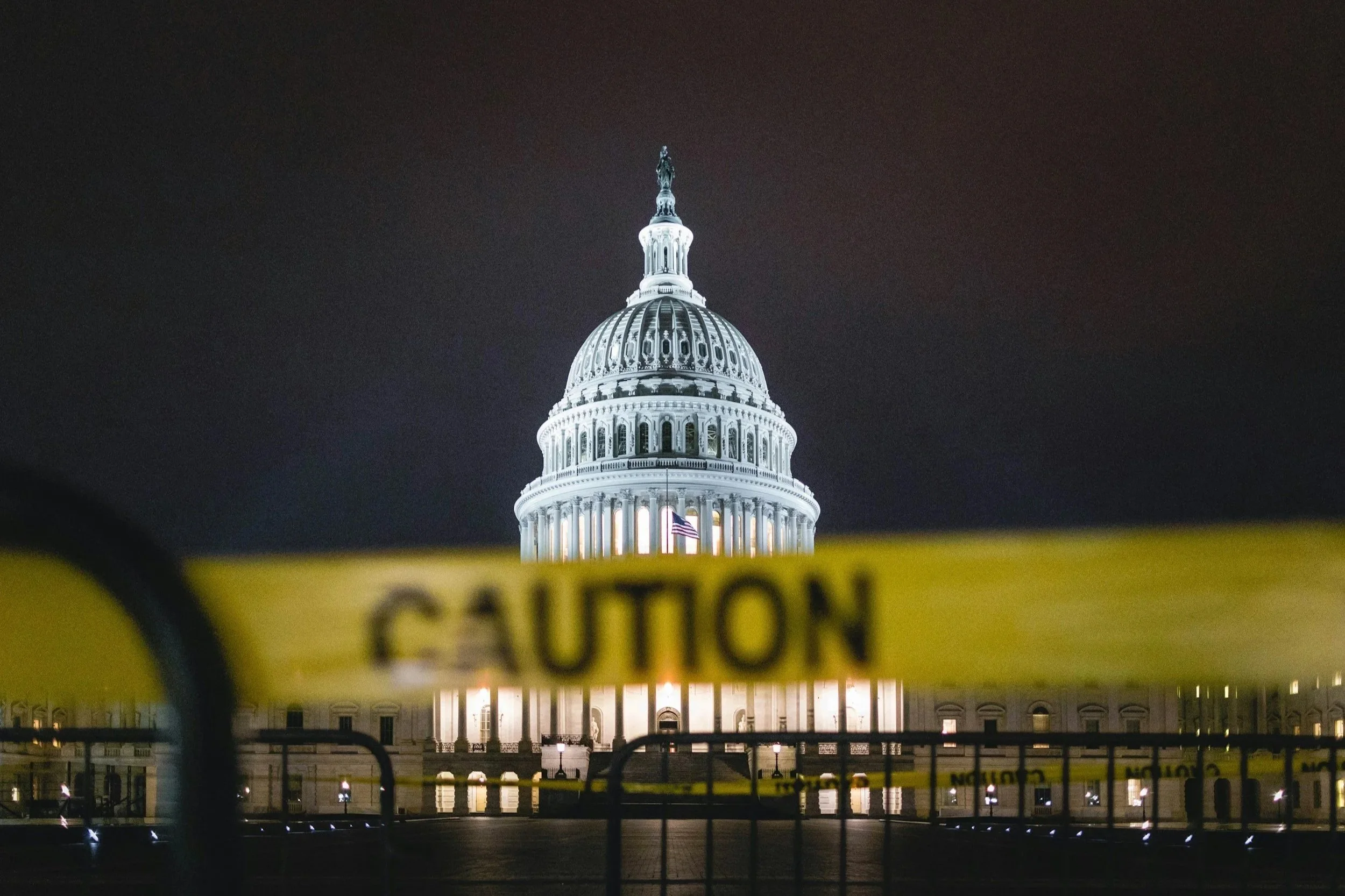
Credit: Stock Imagees
Remember when Congress could at least agree to keep the lights on? When funding the government wasn’t treated as a daring political gamble? That era feels distant now. The appropriations process, once considered the final functional space in American politics, has become yet another battlefield where victory matters more than governing.
The “power of the purse” used to mean responsibility. Today, it means leverage. Shutdowns are no longer a last resort; they’re a strategy. Legislators don’t come to the table to solve problems; they come to prove they won’t blink first.
So yes, the government shut down again. But the real story isn’t about missed paychecks or closed agencies. The real story is how normalized this feels now. How a system designed for negotiation has come to reward sabotage. When did compromise get rebranded as weakness and implementation as betrayal? If appropriations truly were the last standing island of bipartisanship, then we should be asking: Does the latest appropriations crisis and the government shutdown it triggered reflect the hyper-partisanship consuming Washington and dismantle the basic functions of governance?
The prioritization of ideological victory over governance reflects the hyper-partisanship present in Congress today. A striking indicator of this was the role of the Senate filibuster during the 2025 budget crisis, when Congress, through procedural blockage, effectively paralyzed the implementation of the government's appropriations program. The Democratic minority blocked the passage of a House Republican-passed funding bill fourteen times. Even though the Republicans control the House and Senate, Republicans still did not have enough votes to stop the filibuster due to the 60-vote cloture requirement. This has resulted in the longest government shutdown in US history.
The filibuster, originally implemented to protect minority party rights, has now turned into a tool of partisan warfare. According to Sinclair, the use of the Senate Filibuster, Holds, and the Amendment Tree—mechanisms of partisan gridlock—has grown exponentially: from affecting only ~8% of legislative acts in the 1960s to more than 50% by the late 2000s, meaning that every second bill was blocked or delayed by the minority. As parties became more homogeneous in their respective views, they grew less tolerant of dissent: moderate legislators were pushed out, and any cooperation with opponents was branded as treason. Senator Olympia Snow, one of the last Republican moderates, addressed this issue in her farewell speech: "The whole Congress has become far more polarized and partisan, so it makes it difficult to reach bipartisan agreements".
Polarization is also manifested in the fragmentation of the parties themselves, especially the Republican Party. A striking example of the current political gridlock trend is the removal of House Speaker McCarthy in October 2023, when a group of ultraconservatives led by Matt Gaetz removed him as Speaker for relying on Democratic votes to prevent a shutdown. This unprecedented removal of the Speaker reflected that even an attempt at compromise with another party is regarded by radicals as a betrayal. Following this turbulence, in 2025, the Republican Party passed a temporary budget in the House with an almost party-line majority, without considering Democrats' demands. Sean M. Theriault describes this as a manifestation of "partisan warfare": when the fight is not so much about policy as about undermining the legitimacy of the compromise. To illustrate that such trends occurred even before 2025, he mentions the 2011 debt ceiling crisis, when the bipartisan "Gang of Six" senators nearly reached a deal. Still, ultimatums from conservative donors, including Grover Norquist, made any concession unacceptable; Republicans were forced to abandon their own compromise plan to avoid their opponents any "victory". Thus, partisanship has gradually evolved into hyper-partisanship, where the issue is not disagreements over policy, but rather cooperation being perceived as surrender to the enemy.
Political polarization was evident not only on Capitol Hill but also in the White House. During the 2025 crisis, President Trump's rhetoric was openly confrontational. He called on Republicans not to waste time negotiating with Democrats and to act purely along partisan lines. To undermine Democrats, in the sixth week of the shutdown, he appealed to Republican senators with a demand to vote for eliminating the filibuster—to apply the nuclear option and change the rules to bypass the 60-vote threshold. Such a move would be a radical dismantling of Senate norms for the sake of a short-term victory, and even Senate Republican Majority Leader John Thune acknowledged that his colleagues would not support such an extreme measure. The precedent of a president pressuring his own party to change institutional rules for partisan gain reflects a new level of hyper-partisanship.
Additionally, the Trump administration has taken controversial unilateral actions during the shutdown, abusing executive power and undermining the very principles of American democracy. The appropriation process has become a tool for Trump's "authoritarian takeover". For the first time in history, the White House attempted to suspend payments to the Supplemental Nutrition Assistance Program (SNAP) on the pretext that a budget had not been approved. The move was deemed illegal and immediately blocked by a federal court. The government also had to curtail air travel, as the Federal Aviation Administration cut flights due to air traffic controllers working without pay for weeks, causing the national air traffic control system to become overwhelmed. These examples illustrate the executive branch's willingness to use a crisis as leverage, even at the cost of harm to citizens, to force its opponents to capitulate. The Trump administration has essentially made a bet: if the chaos becomes tangible, the public will blame the Democrats for stubborn opposition. More broadly, this means the erosion of a fundamental constitutional principle— the "power of the purse," or Congress's control over the budget.
The 2025 appropriations crisis made one thing clear: the logic of governing in Washington is increasingly being replaced by the logic of political confrontation. Procedural tools like the filibuster have become instruments of obstruction, and unilateral executive actions are no longer exceptional but routine. What was once considered an extreme measure is now treated as an acceptable political tactic. The consequences are visible not only in the growing likelihood of future shutdowns but also in the level of citizens' trust in the federal government, which has steadily declined to historically low levels, with approximately 67% of citizens believing the government is moving in the wrong direction.
The shutdown was not an accident or a bureaucratic mishap. It was a reflection of how the political system has changed. If Congress continues to prioritize political victory over stable governance, crises like this will become a routine feature of American political life. In this sense, the shutdown is not just a temporary pause in government services; it is a warning. The real question is no longer whether Washington can resolve this particular standoff, but whether Congress can restore the trust and culture of cooperation it needs to function before the costs of polarization become irreparable.
Olha Burdeina is a junior at Brown University concentrating in Political Science and International and Public Affairs. She is a staff writer for the Brown Undergraduate Law Review and can be contacted at olha_burdeina@brown.edu.
Luca Feng is a sophomore at Brown University concentrating in Political Science and Chemical Engineering. He is a staff editor for the Brown Undergraduate Law Review and can be contacted at trevor_feng@brown.edu.