Faith and the Public Health: Religious Exemptions in a New Age of Measles
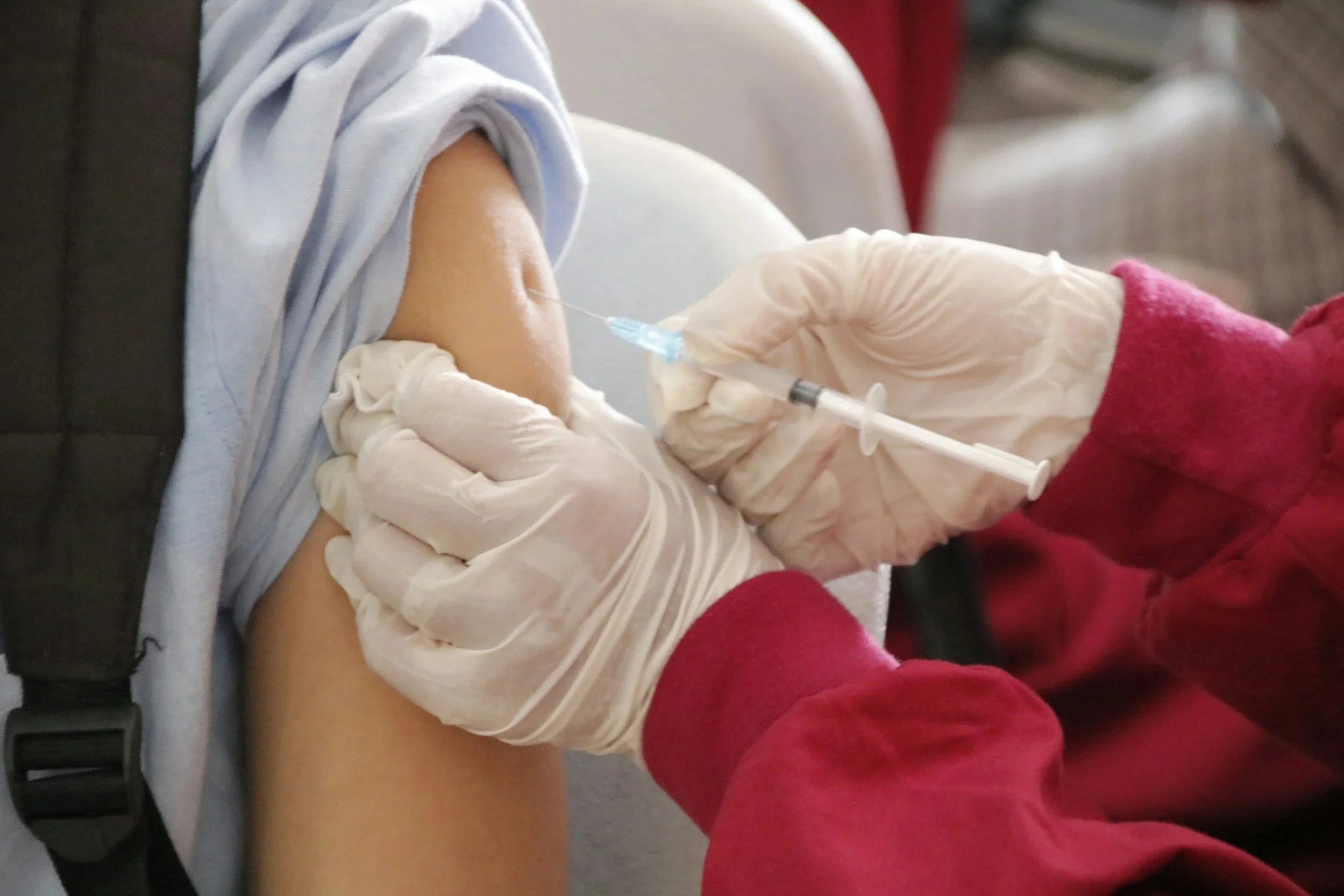
Credit: Stock Images
The United States is a country founded on liberty—a core tenet of which being freedom of religion. But to what extent can the government infringe upon freedom to preserve the health of its citizens as a whole? The state of New York is grappling with this exact question in 2026, as it battles its second major measles outbreak of the last 10 years.
On October 5th, Governor of New York Kathy Hochul (D) declared a statewide disaster emergency due to the outbreak, which has now infected more than a hundred people. Most of these cases have occurred in rural communities with low rates of vaccination. On November 2nd, Hochul announced that a child had died after contracting the disease, marking the first fatal case in the state in 30 years. New York has already faced an outbreak of this magnitude only eight years ago: In the fall of 2018, measles spread throughout religious communities of New York City, infecting 274 people by May 2019. This outbreak too was caused by low vaccination rates, as many children in these communities had religious exemption from vaccination. Despite the state’s pleas for parents to vaccinate their children, some communities pushed back. One Orthodox Jewish group, for example, organized a “vaccine symposium,” which hosted hundreds of attendees and facilitated the spread of anti-vaccine conspiracy theories.
In June 2019, this ordeal led the New York State Legislature to repeal religious exemptions from preexisting school vaccination requirements, also known as PBH § 2164. The decision was a controversial one; when the bill’s vote count was called, the Assembly was met with remarks of condemnation. Then-Governor of New York Andrew Cuomo (D) put the state’s perspective best when he clarified that “[w]hile I understand and respect freedom of religion, our first job is to protect the public health.” It is worth noting here that the bill only repealed religious exemptions, leaving valid medical exemptions intact. Since the bill’s passage, childhood vaccination rates against measles have indeed increased.
However, New York’s repeal of religious exemptions has been challenged repeatedly in the last several years. Time and time again, American courts have affirmed the constitutionality of vaccination requirements over the last century, and these latest challenges are no different. Through the analysis of decades of case law, this article argues that states are not required to offer religious exemptions from vaccination requirements, as they do not substantially interfere with a child's religious upbringing.
Religious freedom is a right guaranteed to all within the United States. However, the point at which freedom of religion ends and state oversight begins has evolved over time in a back-and-forth manner. For instance, Sherbert v. Verner (1963) held that the state could not deny unemployment benefits to Seventh-day Adventists who, in accordance with their faith, could not work on Saturdays. This verdict was reached because the Supreme Court found “no compelling state interest enforced… which justifies the substantial infringement of appellant's right to religious freedom under the First Amendment”. The Supreme Court applied similar reasoning in Wisconsin v. Yoder (1972), which considered whether Amish children must attend school past the eighth grade. Their parents argued that public school would expose their children to values at odds with their faith and draw them away from the Amish community. Chief Justice Warren Burger agreed in his majority opinion, noting that “a history of three centuries as an identifiable religious sect and a long history… demonstrated the sincerity of their religious beliefs.” Most importantly, Burger emphasized that the Amish practice highlighted in this case posed no threat to public safety, so once again, no compelling state interest was found. These cases came together to create the Shebert/Yoder test, which applied the strict scrutiny standard to laws that could burden religious expression. To fulfill this standard, the government must demonstrate that a law serves a compelling government interest and is the least restrictive means towards achieving it.
The Sherbert/Yoder test was the standard for religious freedom until it was narrowed in Employment Division v. Smith (1990). This case answered the question of whether the state owed unemployment benefits to two Native American drug rehabilitation employees who were fired for their use of peyote, a controlled substance, during a religious ceremony. In his majority opinion, Justice Antonin Scalia held that the Sherbert/Yoder test could not be applied to “neutral laws of general applicability.” In other words, an incidental burden of religious practice from a law does not violate the Free Exercise Clause. Requiring a compelling interest for every such law, he warned, “would be courting anarchy.” To further elaborate his point, Scalia stated that this requirement could exempt citizens from genuine civic obligations, such as tax payments or compulsory vaccinations. In response, Congress passed the Religious Freedom Restoration Act of 1993 (RFRA), which restored the compelling interest requirement of the Sherbert/Yoder test. Soon after, however, the Supreme Court overturned a significant portion of the RFRA through City of Boerne v. Flores (1997), which involved an archbishop suing local zoning authorities for preventing the expansion of his church due to the building being located in a historic preservation district. The archbishop argued his rights were violated under the RFRA, but the Supreme Court found that the RFRA in its original form exceeded Congress’s Fourteenth Amendment enforcement powers and imposed a standard far too strict for the evaluation of laws that might burden religious exercise. Therefore, the RFRA could not be applied to the states, unless each passed its own.
But Smith has seen its fair share of narrowing as well. Take Tandon v. Newsom (2021), for example, which involved California’s prohibition of in-home religious gatherings of more than three households but not gatherings of the same size in secular settings. In Tandon, the Supreme Court ruled that government regulations that burden religion are not neutral and generally applicable when treating comparable secular activities more favorably; this decision significantly reduced what laws could be considered neutral and generally applicable because the existence of any secular exception legitimized their challenge under the Free Exercise Clause. Just a few months later, Smith was further restricted by Fulton v. City of Philadelphia (2021), which answered whether Philadelphia could refuse to contract with Catholic Social Services due to its policy of not providing foster certification to same-sex couples. The Supreme Court’s decision held that if a law allows for any mechanism of discretionary exceptions, it is not generally applicable. In his opinion concurring in the judgment, Justice Samuel Alito, joined by Justices Clarence Thomas and Neil Gorsuch, criticized the Court’s circumvention of Smith and called for revisiting the case in its entirety. The core of Smith, however, survived and continues to be relevant today—albeit in a much weaker form.
Today, its importance can be seen in the fight to bring religious exemption back to New York. This initiative was spearheaded by Miller v. McDonald (2025), a lawsuit filed by the Amish schools and their community. They argued that the repeal of religious exemption from vaccines interfered with their right to impart their religious values on their children under the Free Exercise Clause. The lawsuit was filed in response to a $118,000 fine imposed on three Amish schools for not requiring proof of vaccination when enrolling students. Up until March 2025, Miller was rejected twice. In 2024, the U.S. District Court for the Western District of New York granted the defendants’ motion to dismiss because the plaintiffs failed to establish that the repeal of religious exemption was hostile to religion or that PBH § 2164 treats comparable secular activity more favorable than religious exercise—the exact standard established in Tandon.
The plaintiffs appealed this ruling to the U.S. Court of Appeals for the Second Circuit in 2025. In their ruling, the Second Circuit acknowledged that PBH § 2164 satisfies rational basis review, designating school vaccination requirements as genuinely effective and constitutional. The plaintiffs argued that under Fulton, allowing for medical exemptions counted as a mechanism of discretionary exceptions, but the Second Circuit disagreed. They reasoned that receiving a medical exemption depended on “objectively defined” criteria and was not discretionary; physicians issuing these exemptions are doing so through their own professional medical judgment, which is limited by its own statutes and limitations. Moreover, the Second Circuit highlighted that prior to the change, most cases of the 2019 measles outbreak occurred in communities with clusters of unvaccinated individuals, and religious exemptions outnumbered medical exemptions five to one. With all these factors in mind, the Second Circuit held that PBH § 2164 was “neutral on its face” and “does not target or affirmatively prohibit religious practices,” fulfilling the standard of general applicability established through Smith, Tandon, and Fulton. Thus, the district court’s judgment was affirmed.
But once again, the constitutionality of New York’s repeal of religious exemption was called into question when the Supreme Court decided Mahmoud v. Taylor (2025). The Mahmoud decision determined that parents had the right to withdraw their children from class when storybooks on L.G.B.T.Q. topics were discussed. To argue their case, the petitioners relied on Yoder, as both were specifically about the religious upbringing of children. One of the most significant developments from Mahmoud was its extension of Yoder: “when a law imposes a burden of the same character as that in Yoder, strict scrutiny is appropriate regardless of whether the law is neutral or generally applicable.” This decision led the Supreme Court to remand Miller, forcing the Second Circuit to give the case another look.
However, the notion that Mahmoud alters the overall analysis in Miller is incorrect. Mahmoud and Yoder both concern state interference with the religious formation of children. Yoder argued that compulsory school attendance pulled Amish children away from their community’s way of life; Mahmoud found that classroom instruction of L.G.B.T.Q. stories undermined the religious beliefs parents sought to instill. Both cases concern where and what the state teaches children and whether those topics hinder their religious upbringing. A vaccination requirement is different. On this distinction, the Second Circuit stated that PBH § 2164 “does not regulate what children are taught, does not require them to affirm any belief, does not expose them to state-selected instruction contrary to their parents’ faith, and does not enlist school officials to displace parental religious formation.” Instead, it acts as a public health condition that must be fulfilled before entering a shared space, such as the classroom. Simply put, religious exemptions from vaccination pose a significant health risk to others while not substantially interfering with the religious upbringing of the children.
These cases are not the first to challenge vaccination, and they will likely not be the last. Whether Mahmoud changes anything depends on what came before it—and in the United States, the state authority to require vaccination is more than a century old. Jacobson v. Massachusetts (1905) was the first Supreme Court case to uphold a state smallpox vaccination requirement, reasoning that “the police power of a State must be held to embrace, at least, such reasonable regulations established directly by legislative enactment as will protect the public health and the public safety.” Zucht v. King (1922) extended Jacobson’s reasoning to include vaccination requirements for school attendance. And in Prince v. Massachusetts (1944), the relationship between vaccination and religious freedom was specifically clarified, stating that while religious freedom is a right, it does not include the liberty to expose a child or the community to disease and, potentially, death.
Proponents of religious exemption use Yoder to substantiate their claim for a more expansive reading of the Free Exercise Clause. In Yoder, the respondents succeeded because the Supreme Court applied the strict scrutiny standard—again, this presumptively makes a law invalid until the state can demonstrate that it serves a “compelling state interest”, is “narrowly tailored”, and is the “least restrictive means”. Ultimately, the state failed to prove that forcing Amish children to attend school met this standard.
Even if strict scrutiny were applied, a vaccine requirement that only offers medical exemptions would survive it. The state’s interest is indeed compelling, as this year’s outbreak has illustrated that the dangers are not merely hypothetical. Measles is extremely contagious, requiring at least 95 percent vaccination coverage to ensure herd immunity. The priority is to protect the health of children. The health of those who cannot be vaccinated due to legitimate medical conditions relies on those who can. Prince emphasized this reality eighty years ago. The mandate is also narrowly tailored, as no alternative would work well. It is not reasonable to exclude unvaccinated children from school; once an outbreak has begun, diseases can be contagious days before symptoms appear.
There is also the topic of faith. The Amish’s religious beliefs are backed by three centuries of historical sincerity. This authenticity aided their victory in Yoder. Yet, even they are subject to school vaccination requirements, as the Second Circuit ruled through Miller. Furthermore, even if genuine faith was a valid reason for being exempt from vaccination, only giving religious exemptions to those who are truly sincere in their beliefs would require a constitutionally-dubious religious examination.
It must be noted that only four states in the U.S. currently lack religious exemptions from vaccination. This could be used to imply that a less restrictive alternative exists, which means New York’s PBH § 2164 does not satisfy strict scrutiny. The Supreme Court has relied on this comparison before. In Holt v. Hobbs (2015), it held that Arkansas could not prevent a Muslim prisoner from growing a half-inch beard in accordance with his religious beliefs because many other prison systems allowed the same without any issue. In Holt, Arkansas failed to offer a persuasive reason for why it cannot do the same as other states. Applying the same logic here would lead one to wonder why New York cannot protect public health while accommodating religious objectors as forty-six other states do.
However, the fact that most state legislatures choose accommodation does not make religious exemptions constitutionally required. New York’s circumstances differ because of its prior experiences. The repeal was not passed arbitrarily; it occurred because of an outbreak where religious exemptions outnumbered medical ones five to one. Strict scrutiny asks whether the alternative measure serves the state’s interests equally well—New York’s 2018 outbreak illustrates that having religious exemptions did not. While the 2026 outbreak occurred after the repeal of religious exemptions, it is centered on rural areas where vaccination rates are low, especially among young children for whom the school vaccination requirement does not yet apply. The 2018 outbreak mainly occurred in New York City, where vaccination rates are now high.
For more than a century, the Supreme Court has solidified its position on compulsory vaccination, emphasizing it as an example of individual liberty yielding to public health. The scope of religious freedom in our courts continues to shift, but as things currently stand, PBH § 2164 passes the standards shaped from Smith, Tandon, and Fulton. Mahmoud does not unsettle it. Its result does not entitle parents to send unvaccinated children into classrooms they share with others. A mandate with medical exemptions defined by objective criteria is neutral and generally applicable. The current New York measles outbreak is a reminder of what this mandate is meant to protect.
Daniel Shin is a senior at Brown University studying Economics and International and Public Affairs. He is a Senior Writer for the Brown Undergraduate Law Review and can be contacted at sangjun_shin@brown.edu
Nik Greborunis is a junior at Brown University studying Political Science. He is a Senior Editor for the Brown Undergraduate Law Review and can be contacted at nikolas_greborunis@brown.edu
ayden Hradek is a sophomore at Brown University studying International and Public Affairs and Social Analysis and Research. He is a Senior Editor for the Brown University Undergraduate Law Review and can be reached at hayden_hradek@brown.edu