AI Art and The Doctrinal Debate of Copyrightability
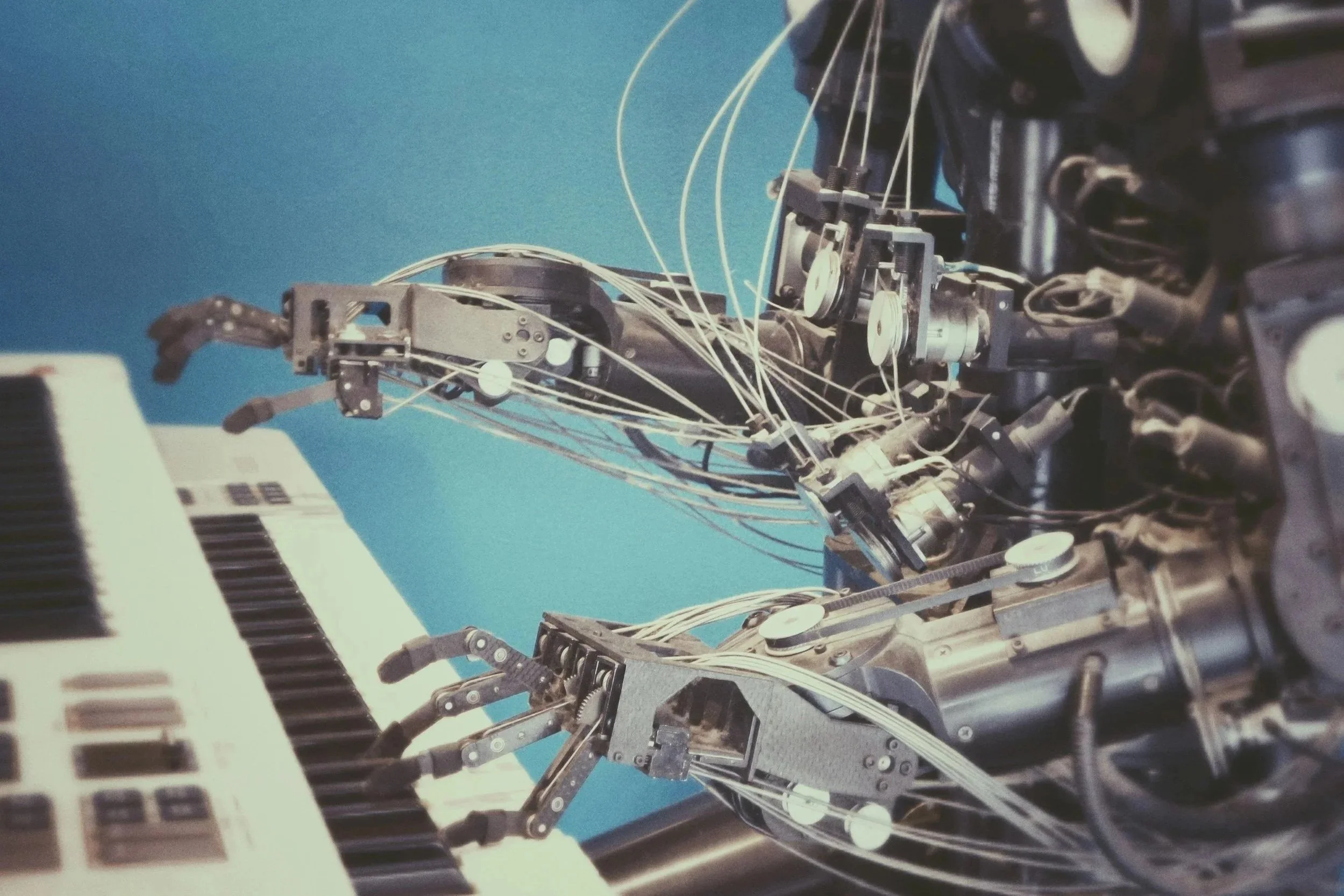
Credit: Stock Images
The capabilities of artificial intelligence to generate images and videos has muddied our idea of what counts as visual art, leaving creatives and the entertainment lawyers who represent them in a world of uncertainty and volatility. This confusion especially applies to copyright, a fundamental part of allowing artists to protect their work. As it stands, the legal world’s current ideas on what exactly can be copyrighted are being stretched too thin. Just as the Digital Millenium Copyright Act updated copyright rules for the digital age, a new set of rules and legislative intervention must be considered for the age of AI.
In Stephen Thaler v. Perlmutter (2025), computer scientist Dr. Stephen Thaler attempted to submit a copyright registration application for a picture created by his AI tool, the “Creativity Machine.” Thaler listed his tool as the author of the work, and himself as the owner. Upon a rejection from the United States Copyright Office (USCO) based on its human-authorship requirement, Thaler appealed to the Copyright Office’s Registration Program. He argued that the human-authorship requirement was “unconstitutional and unsupported by either statute or case law” as well as based on outdated judicial opinions “from the Gilded Age.” Additionally, Thaler cited that he should own the copyright under the work-made-for-hire doctrine, which allows for the person for whom the work is made to own the copyright. The Registration Program stuck firm to their human-authorship requirement, and they rejected Thaler’s work-made-for-hire argument because of the lack of a contract between Thaler and the “Creativity Machine.” When the Program denied his appeal, Thaler took his case to district court, and then the United States Court of Appeals.
In 2023 in the U.S. District Court for the District of Columbia, Thaler again argued using his ideas of the invalidity of the human-authorship requirement and the work’s copyrightability under the work-made-for-hire doctrine. He also introduced a new assertion that the work is copyrightable because a human “provided instructions and directed AI.” Like the Copyright Office, the court held that human authorship is required and Thaler could not rely on the work-made-for-hire argument because it presupposed that the work was copyrightable in the first place. The district court also ruled that since the case had presented “only the question of whether a work generated autonomously by a computer system is eligible for copyright,” Thaler waived his new argument.
The United States Court of Appeals affirmed the denial of Thaler’s copyright application, stating that “the Copyright Act of 1976 requires all eligible work to be authored in the first instance by a human being.” While this seemingly meant that the USCA declared that works eligible for copyright protection must be created by humans, the Court highlighted that “the rule requires only that the author of that work be a human being—the person who created, operated, or used artificial intelligence—and not the machine Itself.” They then refused to “wade into technologically uncharted copyright waters,” claiming that “accommodating new technology” is a job for Congress. USCA’s recognition of this fact underscores the importance of reevaluating copyright in light of this new technology. With them unable to provide a legal precedent in light of these “uncharted copyright waters,” the need for legislation to guide their decisions is on full display.
The U.S. Copyright Office has attempted to draw lines in what is eligible for copyright, but the unique nature of each specific copyright case makes this difficult. In their 2023 “Copyright Registration Guidance: Works Containing Material Generated by Artificial Intelligence,” the Copyright Office states that “If a work’'s traditional elements of authorship were produced by a machine, the work lacks human authorship and the Office will not register it.” It explains that in cases of AI-generated material with “sufficient human authorship,” “copyright will only protect the human-authored aspects of the work, which are ‘independent of’ and do ‘not affect’ the copyright status of the AI-generated material itself.” In 2023, this policy was applied to a graphic novel with human-authored text and AI-generated images. The Office decided that the text was copyrightable, but the images were ineligible. The Office stressed that despite this rule, technological tools can be a part of the creative process. They highlighted that “what matters is the extent to which the human had creative control over the work's expression and ‘actually formed’ the traditional elements of authorship.”
Unfortunately, this policy leaves an extensive gray area. While their rules say that generally AI art resulting from text prompts is ineligible for copyright, one could argue that human intervention after the image was generated by the text prompt puts the image back into the running.
Invoke AI, an engine for “AI-powered image generation” put this argument to the test. They managed to secure copyright protection for their AI generated work “A Single Piece of American Cheese” because the USCO found that its process contained sufficient creative human output. Invoke allows for users to use AI to regenerate select regions of an AI-generated photo, adding enough human intervention to secure the copyright.
This decision by the USCO left questions for creatives and lawyers alike, who are finding that the law is struggling to keep up as technological innovation continues to outpace existing copyright law. Although the Copyright Office’s decision regarding Invoke AI demonstrates that AI generated work can receive copyright protection in some contexts, it does not establish a defined legal standard showing just how much human output must be involved. Artists and entertainment lawyers have been left without guidance from legal authorities to answer these questions, prompting renewed doctrinal debate about copyrightability.
This debate becomes especially relevant when one considers the film industry. If only the human-authored aspects of a work can be copyrighted, where does that leave a film that contains portions created by AI? Hollywood’s film studios rely on Chain of Title, a massive paper trail of legal documents that proves that production companies can legally make, sell, and distribute films and shows. If AI threatens a work’s copyrightability, it interferes with the economic process of licensing, assigning rights, paying royalties, and distribution. Distributors and production companies could be unable to prove they own what they are selling, possibly leading to extensive legal battles. The potential risks make AI-assisted work an exceptional liability. There is no clear amount of AI-prompted elements in artistic work that renders the entire work ineligible for copyright. In this way, AI threatens to contaminate artistic work.
With a plethora of unanswered questions and confusions around AI and copyrightability, it may be time for a modern rendition of the Digital Millennium Copyright Act. Just as the DMCA modernized copyright law for the age of the internet, a new set of copyright considerations must be put into place for this new age of AI. The DMCA, which was passed in 1998 to comply with two treaties passed by the World Intellectual Property Organization two years prior, amended the Copyright Act of 1976. Digital copying and distribution was becoming remarkably easy with the internet, and online service providers feared being held liable for hosting infringing material on their platforms. These providers operated in a legal gray area until the DMCA introduced safe harbor provisions that shielded them from liability under certain conditions. The DMCA is by no means perfect, and a variety of its sections rightfully face scrutiny, but it filled in legal gaps that allowed for the open internet that we know today.
The current reluctance of courts to make bold decisions regarding copyright, as seen in USCA’s refusal to “wade into technologically uncharted copyright waters” in the Thaler v. Perlmutter case, demonstrates the necessity of new legislation regarding copyright. There needs to be clearer standards deciding how much human involvement in a piece makes it eligible for copyright, especially as technology continues to progress. Currently, the USCO wrestles with the question of how it can encourage technological progress while protecting the work of the human creators that copyright was originally created for. Without legislation grounding their decisions, copyright as a legal right to protect work and provide financial incentive could transform, leaving people with too little—or too much—control over the work they output or create.
Izabella Piatkowski is a sophomore from Virginia studying Political Science and English. She is a staff writer for the Brown Undergraduate Law Review and can be contacted at izabella_piatkowski@brown.edu.
Wesley Horn is a junior at Brown University concentrating in History and Economics. He is a staff editor for the Brown Undergraduate Law Review and can be contacted at wesley_horn@brown.edu.
Azuri Brown is a freshman at Brown University concentrating in Philosophy, Politics, and Economics. She is a staff editor for the Brown Undergraduate Law Review and can be contacted at azuri_brown@brown.edu.