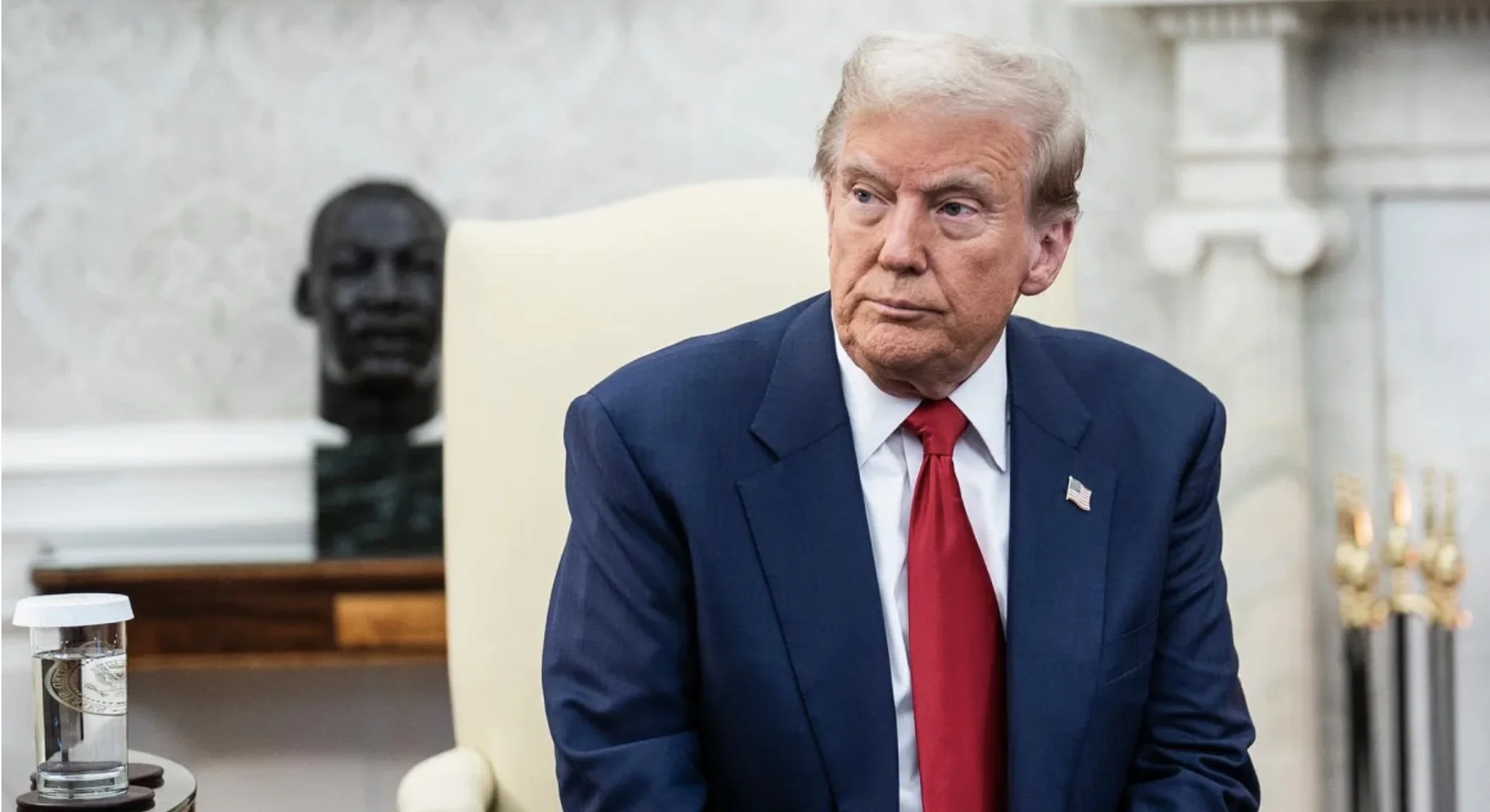
The Alien Enemies Act was written for wartime. Now, it’s being used to wage war on immigrants. Echoing centuries of anti-immigrant sentiment in the United States, Trump’s recent invocation of this Act is one of his many legally questionable power grabs. However, the Supreme Court may have finally drawn the line.
President Trump’s refusal to comply with federal court orders regarding his invocation of the Alien Enemies Act in his campaign of mass deportations threatens to topple the delicate balance between the judiciary and the executive branches.
Read MoreSince the start of the Trump administration, about 40 of the more than 700 immigration judges in the Justice Department have been fired or agreed to leave. Meanwhile, Trump has invoked an eighteenth-century wartime law to deport hundreds of foreign residents without a hearing in court. (Image credit: Reuters)
Read MoreSince the beginning of Russia’s full-scale invasion of Ukraine, one of the most horrifying and underreported atrocities has been the systematic deportation of Ukrainian children. The abduction of children is not merely a wartime aberration—it is a calculated strategy. Such actions are not only unethical —they are illegal under international humanitarian law and potentially amount to genocide. (Image credit: UNICEF)
Read MoreAs states like Arizona and Utah loosen restrictions on Rule 5.4, corporations that were previously barred from owning law firms are now able to provide legal services but concerns regarding partiality creates ethical implications.
Read MorePresident Trump recently signed a number of executive orders targeting some of the nation’s top big law firms, seemingly in retribution for past political or legal opposition mounted by attorneys at those firms.
Read MorePresident Trump, in an expansion of presidential power, has acted to downsize the federal government. At the core of this initiative is a federal buyout program, with Elon Musk at the helm, designed to offer employees financial incentives to voluntarily leave their positions. (Cover credits)
Read MoreElon Musk’s leadership of DOGE—Trump’s radical cost-cutting initiative—has precipitated a constitutional conflict challenging the boundaries of executive authority, the role of unelected officials, and the judiciary’s willingness to rein in a presidency intent on reshaping the federal bureaucracy.
Read MoreIn recent weeks, President Donald Trump has signed an executive order attempting to end birthright citizenship. A judge swiftly denied this. During his campaign, he promised to deport approximately 1 million undocumented immigrants per year which would nearly triple the 1.5 million individuals he deported during his first term. While there is a push for even more restrictive immigration laws from politicians like President Trump, current legislation allows systems of legal violence against immigrants to persist, reinforcing a historical pattern of exclusion, exploitation, and marginalization.
Creator: Sandor Csudai picturing asylum seekers
Read MoreCan public schools teach inclusivity without infringing on religious liberty and parental rights? The Supreme Court’s decision in Mahmoud v. Taylor could redefine the future of public schooling in America. (Image credit: National Catholic Register)
Read MoreIn a landmark decision, U.S. District Judge Richard Boulware finalized a $375 million settlement in the antitrust lawsuit against the Ultimate Fighting Championship (UFC). This resolution concludes a decade-long legal battle initiated by 1100 mixed martial arts (MMA) fighters who alleged that the UFC engaged in monopolistic practices that suppressed their earnings and restricted their professional opportunities.
Read MorePresident Trump’s Executive Order titled “Protecting the Meaning and Value of American Citizenship” denies birthright citizenship based on the immigration status of parents.
Read MoreThe Equal Rights Amendment, first introduced over 100 years ago, has been a key goal for three waves of feminist movements. However, after a century of legal and political turmoil, the amendment recently faced its legal death. Why is an amendment proclaiming gender equality so controversial?
Read MoreTrump’s presidency has pushed the boundaries of executive power, defying legal precedent and dismantling constitutional checks and balances. As lawsuits mount and the Supreme Court weighs in, his strategy appears less about governance and more about cementing presidential supremacy.
Read MoreNearly 4 months after Americans went to the polls in November, the North Carolina Supreme Court. This article explores Republican Jefferson Griffin’s challenges to the results of the election and the legal and political implications of the state Supreme Court deciding who will sit on the bench for the next nine years.
Read MoreThe fatal December beating of Robert Brooks, an inmate in an Upstate New York correctional facility, brought to light discussions of prisoner protections. Though shocking, this event reveals a larger pattern of Eighth Amendment rights violations in the state’s prisons, calling into question the effectiveness of current state laws in preventing inmate abuse.
Read MorePresident Trump’s proposed sovereign wealth fund is the latest in a series of unprecedented and constitutionally murky efforts to reshape national economic policy through executive action.
Read MoreImagine if you could only fuel your Honda at a Toyota gas station – and had to pay more to do it. Welcome to Tesla’s dominance: this article examines the legal implications of Tesla's vertical integration and examines how antitrust principles apply to Tesla today. (Image credit: MIT Technological Review)
Read More